- Welcome
- What am I doing?
I figure that to pass the time while I sit in the Toronto airport awaiting my flight to London where I will connect to Stockholm, I may as well start off this blog with a real post and let my adoring followers know what exactly I’m up to.
I don’t know!
Well, I have some idea. I’m backpacking around Europe for awhile, especially focusing on the Eastern and post-Soviet parts since they’re inexpensive and interesting.
I know what you’re thinking. “Stockholm, inexpensive!?”, you correctly exclaim, knowing full well that Stockholm is the opposite of inexpensive, out-expensive. There is a reason why I’m going to such a horrible, terrible, no good place however, and that reason is Waves of Darkness on the Baltic Sea. WoDotBS is a music festival of neo-folk, darkwave, and other dark, spooky music that is taking place on the ferry/cruise from Stockholm to Riga and back. Don’t know where Riga is? You’re probably not alone. Look it up.
Having seen this festival I’m gonna get the heck outta the Holm of the Stocks and head to the equally expensive but far superior country that is Finland. I like Finland. A lot. I need to go there for a while even if I can barely afford their glory.
After Finland… Wait. Look at a map, you’ll need it. I can wait while you find one.
Okay, after Finland I’m headed down through Estonia, Latvia, and Lithuania. Then, to Belarus, a country which almost takes the post- out of post-soviet. From there, Poland, Czechia, Slovakia, Austria, Hungary, Romania, Moldova. Moldova is the least visited country in Europe, but you know what is less visited than that? A country which doesn’t technically exist. Transnistria, capitol Tiraspol, is a sliver of land in eastern Moldova that has its own government, currency, and passports, but just can’t get the recognition it needs to be a real country. It really takes the post- out of post-Soviet. Thrilling.
I may pop into Ukraine if the mood hits, then back through Romania to Serbia, Croatia, Slovenia, Bosnia & Herzegovina, Montenegro, Albania, Kosovo, North Macedonia, and Bulgaria. Heck, if I have time I might even go to Greece and Turkey.
This is my plan, so hold me to it.
- Stockholm, Sweden
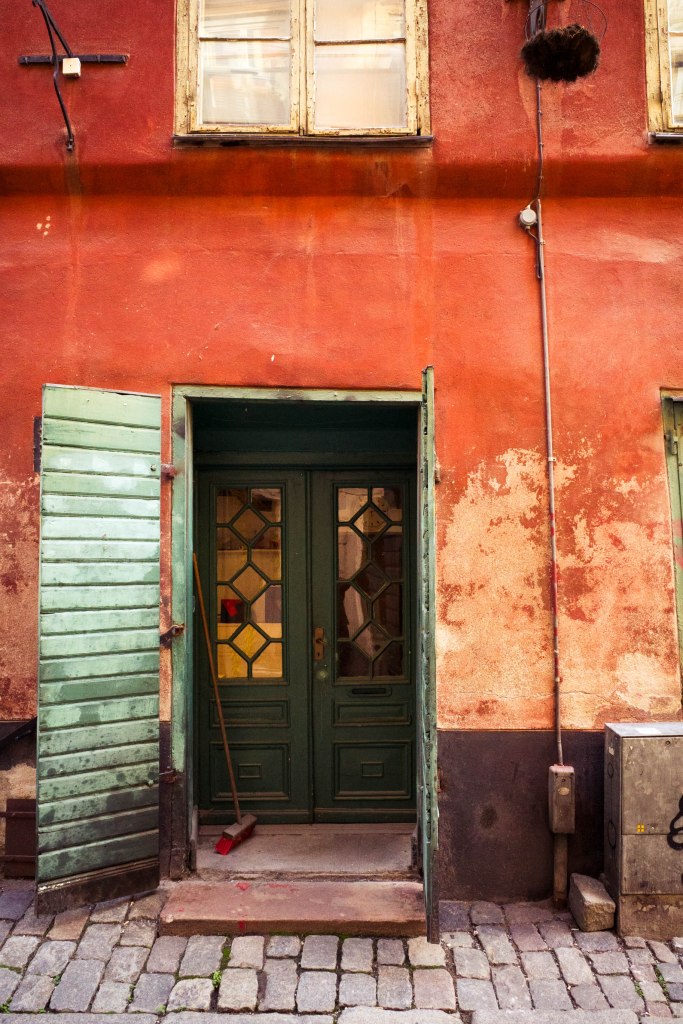
Two days now in Stockholm. Luckily many of the museums are free, because the food is expensive. Groceries are reasonable, but my hostel doesn’t have a proper kitchen, so I’ve been eating out and ruining my budget. I just tell myself that I’ll make up for it once I get to less expensive countries.
I’ve spent my time wandering the streets and visiting museums and libraries. As mentioned above, many of the museums have free entry, so I haven’t bothered with those that expect payment.
The Medieval Museum was right up my alley. It is mostly concerned with medieval Stockholm, and includes a replica of what part of the city may have felt like back then. Not bad.
I stumbled upon The Living History Forum, it looked museum-like, and it looked free, so I stumbled on in. The current exhibition is about freedom of speech and it was ████████████ multimedia, ███████████████ █████████████ virtual reality ████████████████████████████ ██████████████.
The Mediterranean Museum contains a collection of ancient artifacts from Cyprus, much of them Greek and Roman, as well as and ancient Egyptian exhibit.
That was day one. Crazy.
I must say, Stockholm is pretty busy. Pedestrians cross the street with wild abandon, unmindful of traffic. Bicyclists weave between cars. Cars spend a lot of time stopping for people. It’s no large South-East Asian city, but the flow of people seems less calm and collected than I expected from a country known for simple design and a chill way of life.
Today, I spent hours wandering the National Museum and its massive art collection. As well as paintings and sculpture from history, it contained quite a collection of well designed items from the last century or so, most of it Swedish of course. Chairs, telephones, a jackhammer, cutlery sets. Things like that.
I saw that a church was having a free organ recital, so I stopped on in. Turns out the Church is dedicated to St. James, patron saint of travellers. Perfect. Although the church is called St. Jacob’s because in Swedish James and Jacob are the same. The music was quite good, but it was played on a small pipe organ, the size of a large wardrobe, rather than the church sized pipe organ that was available.
Anyhow, those are some highlights. It’s nice here. I fit right in until I can’t speak Swedish.
- Riga, Latvia
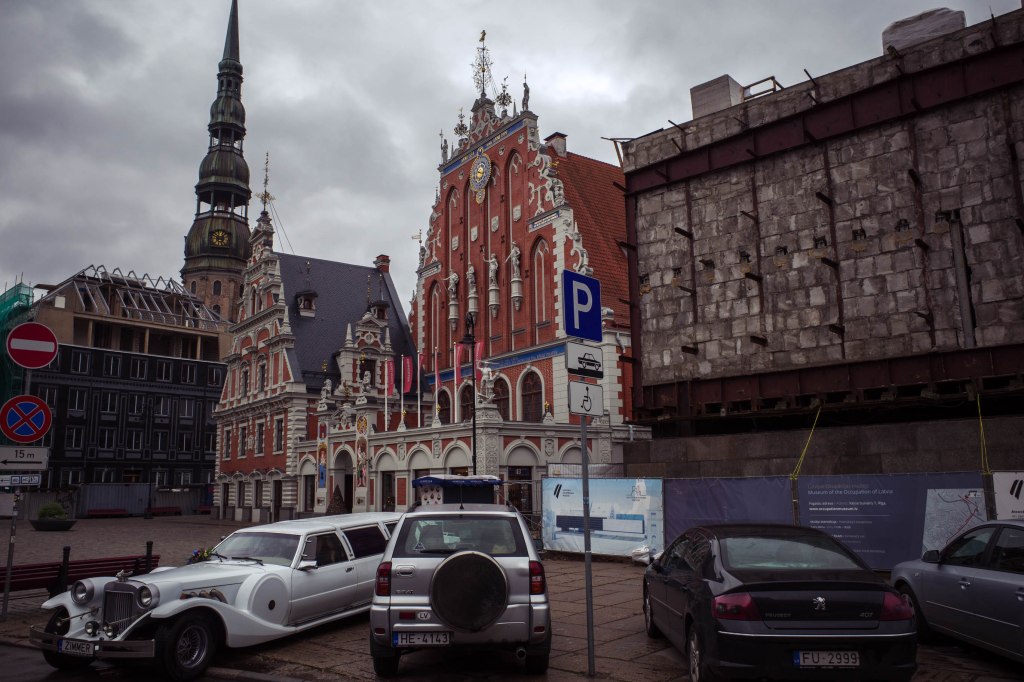
I arrived in Riga on the ferry from Stockholm, with approximately 5 hours to see the sights before I shipped off back to Sweden on day 2 of the Waves of Darkness on the Baltic Sea music festival (a post about that to come).
Five hours to see a city is far from ideal of course, but thankfully the main sights in Riga are all within a pleasant walking distance from the ferry terminal.
First things first. In Latvia, ‘sveiki’ means hello, and ‘paldies’ is thank you. Latvian and Lithuanian are two of the oldest languages in the Indo-European language family. This means that linguists believe them to be the closest to the common root language from which most of the languages in Europe, India, and Iran have evolved. Because of this I noticed many words which appeared similar to English or French, however there were just as many which, like ‘sveiki’, didn’t seem to have any relation to languages I know.
Anyhow, Riga is beautiful. It was overcast and slightly rainy while I was there, but I didn’t mind in the slightest. I started with a walk to a slightly out of the way ‘Soviet-style’ restaurant for lunch. The interior felt like a throwback to the 60s, but in a chic, hip way like we might have in North America, so I don’t feel like it was modelled after the sorts of places that working class Latvians would have eaten during Soviet times. I ate a pork cutlet with fries, it was very simple and plain, but it sure hit the spot. I also tried the famous Riga Black Balsam, which is a herbal liqueur that is black. It tastes just as potent as the description suggests.
Riga is renowned for having the largest collection of art nouveau architecture in the world. I couldn’t define art nouveau for you, but it’s from the turn of the century and it’s very nice. I took a lot of photographs of it so that I don’t have to describe it (they’re at the end).
There is also a top notch old town in Riga (there will be many an ‘old town’ throughout my journey, something about Europe and history I guess…). In Stockholm the old town was incredibly touristy, with the bottom floors of every beautiful old building full of souvenir shops and cafes. In Riga’s old town it seemed like only every second shop or so was in your face tourist-land. Of course this is because Riga is a smaller and less popular destination than Stockholm, but it really improves the experience. The art nouveau district is just normal residential streets, poor residents.
I visited my first ever Orthodox cathedral. Wow. It made Catholic cathedrals look plain in comparison. Photography was not allowed inside, so I will endeavour to paint a picture with words. Upon entering the air is redolent of incense. Every bit of wall is painted with designs and images. Gold and light blue dominate. All around the walls are icons, images of saints wrought in gold and silver, each with their own candle holder so worshippers can light candles at whichever icon they prefer. Opulent and dazzling probably describe it best.
One of the biggest attractions in the old town is The House of the Black Heads. This was the home of the travelling merchant guild known as the Black Heads. Their symbol was St. Maurice, a North African, hence the name. It was destroyed in WWII and rebuilt in 1999, but you can still visit the original cellars.
Riga was excellent. I’ll be back in Latvia in a few weeks after I’ve been to Finland and Estonia, and I will gladly spend more time in Riga, although I also want to see more of Latvia.
- Waves of Darkness on the Baltic Sea
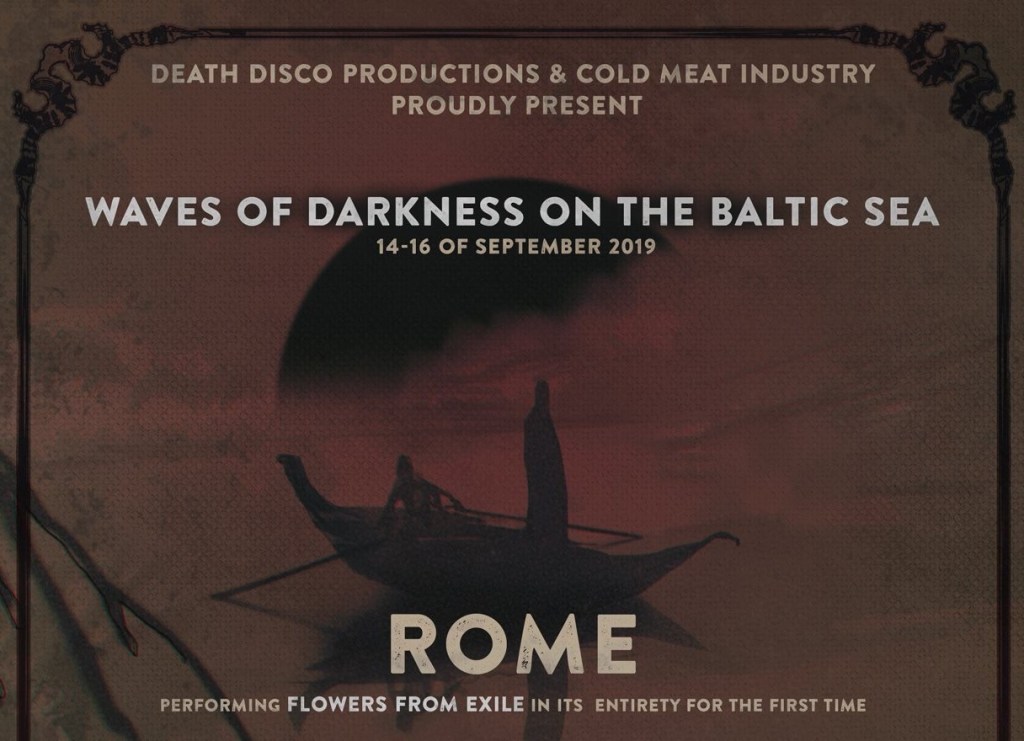
Not to disparage Sweden too much, because it’s very nice here, but I wouldn’t have come here on this trip, which is meant to be budget, if not for this music festival. It took place on the ferry/cruise from Stockholm, Sweden to Riga, Latvia. One night of music on the way there, one on the way back.
The festival was of bands playing in the neofolk, martial-industrial, and darkwave genres. So dark, gloomy, beautiful music. I mainly came for the band Rome, who are an neofolk band from Luxembourg. They were performing their 2009 album Flowers From Exile, which happens to be among my favourite albums of all time. Click here to listen to a bit, don’t worry, it’s quite pleasant. To hear this live while the Baltic Sea moved the boat beneath my feet was quite an experience. In fact, I think the entire festival was improved by the rocking of the boat on the waves.
The other bands were also very enjoyable, but I know them less well, and they’re unlikely to be of interest to you unless you enjoy this style of music, so I will end this post here. Make sure to read the previous post about the time I spent in Riga mid-festival.
- Turku, Finland
I had one last full day in Stockholm following Waves of Darkness. From 10:30 when the ferry arrived until 20:00 when I departed for Finland. I spent this time relaxing, writing my blog posts, and wandering around an area of the city I hadn’t explored previously.
I chose the least expensive ferry option for my trip to Turku. Rather than Tallink Silja which I took to Riga, I went with Viking Line. I guess the vikings probably didn’t sail in the lap of luxury themselves. My bunk was deep in the bowels of the ship, beneath even where they keep the cars. It was so cheap that I didn’t even have an electrical outlet in my room. But that was totally fine because all I wanted to do on the ferry was get as much sleep as possible before we arrived in Turku bright and early at 07:30. My neighbour in this out of the way part of the ship was a cool young guy from South Africa, so I did get the chance to socialize and go for a drink at the on board bar before bed.
This ferry ride made for the third night in a row of sleeping on the ocean and I definitely recommend it. The rocking of the sea and the thrum of the engines really lulls one into a pleasant sleep. So I arrived in Turku well rested to meet an old friend who I hadn’t seen in six whole years.
Erik was an exchange student in Finland at the same time as me in 2012/2013, and we became very good friends during that time. He put in the effort to learn Finnish while he was here, and it paid off since he was able to come back for university, so he’s been living in Turku for over four years now. It was lovely to see him and reminisce about the old days. Plus, I had a local guide to the city and a place to stay.
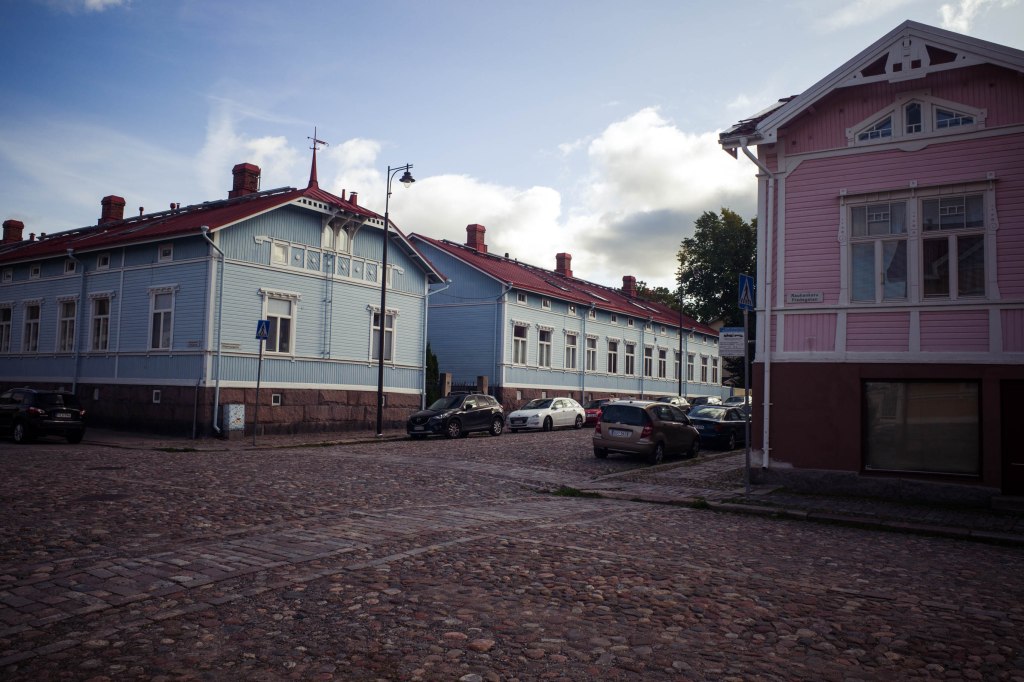
Turku is a very pleasant little city. I had visited it a couple of times during exchange, but my memory of it was pretty darn foggy. The whole city seems to be under construction at the moment, but I really liked what they were doing with the place. They’re revitalizing old buildings, rather than tearing them down, and the new buildings they’re putting up have been designed to fit nicely with the old. Turku has quite a few old wooden houses, which are absolutely idyllic and very pretty (Erik is lucky enough to have his apartment in one such building). So the new apartments that they are putting up near these old houses have been built with wooden siding, and painted in the same colours as the old buildings. Even more interesting is that they have turned the long abandoned prison/mental hospital into swanky apartments, although I feel as if they may need to give them away in order to get anyone to live in such an obviously haunted location.
I visited Turku castle, which was well worth the entrance fee, cause it’s absolutely packed with stuff. Not only do you get to walk through the entire castle, some of which is medieval and some of which has renaissance and more modern interiors, but you also get museum exhibits on everything from women in the 16th century to Finnish military medals and coins. I was honestly not prepared to spend such a long time in there, but I wanted to see it all.
Though that was nice, I’m not really interested in doing much ‘tourism’ while in Finland. Having lived here for a time, I just want to rediscover and re-experience some of my favourite things from my time here, so simply wandering the city and eating Finnish foods (there is a picture and description at the bottom), and of course sauna is all I need.
But that’s enough rambling. What I really came to Finland for was Helsinki, paras kaupunki maailmassa! Which is where I currently am, but you’ll have to wait until I’ve spent some time here before you get your blog post you greedy little thing you.
- Helsinki, Finland
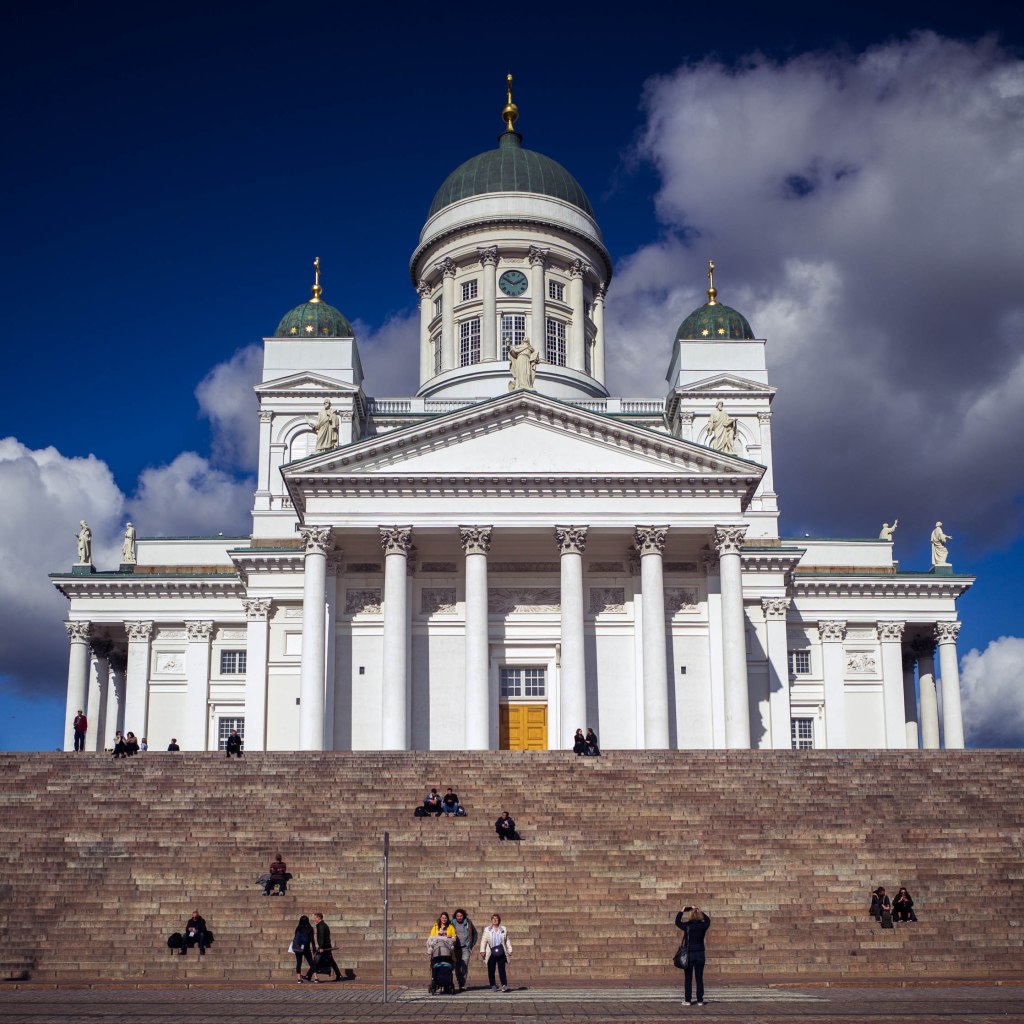
Here I am, back in Helsinki after over six years. I have the most stereotypical tourist image of the city at the top of this post because I barely took any photos while I was here, since I didn’t really feel like a tourist. The moment I arrived on the train from Turku I made my way to the Tuomiokirkko (cathedral), just to get it out of the way, and I figured I may as well take the photo while I was there.
Helsinki feels the same as when I lived here six years ago. I have changed a lot in that time, and Helsinki has too, but the way the city feels to me, and how I feel while I’m here, is still the same. When I arrived I felt as if I had never left. It was not an emotional reunion like I thought it might be, I just got off the train, exited the station, and set out through streets that felt as if I had just seen them days before. It feels good.
The city is peaceful for how large it is, there is so much green space, and it’s very easy to get around by walking, biking, bus, tram, metro, and train. I just feel at home here, even after all this time. But that also means that I’ve got to move on, because I’m in Europe to travel, and Helsinki’s familiarity might shake me out of my groove.
Anyhow, below are a couple of pictures from my time here, with captions!
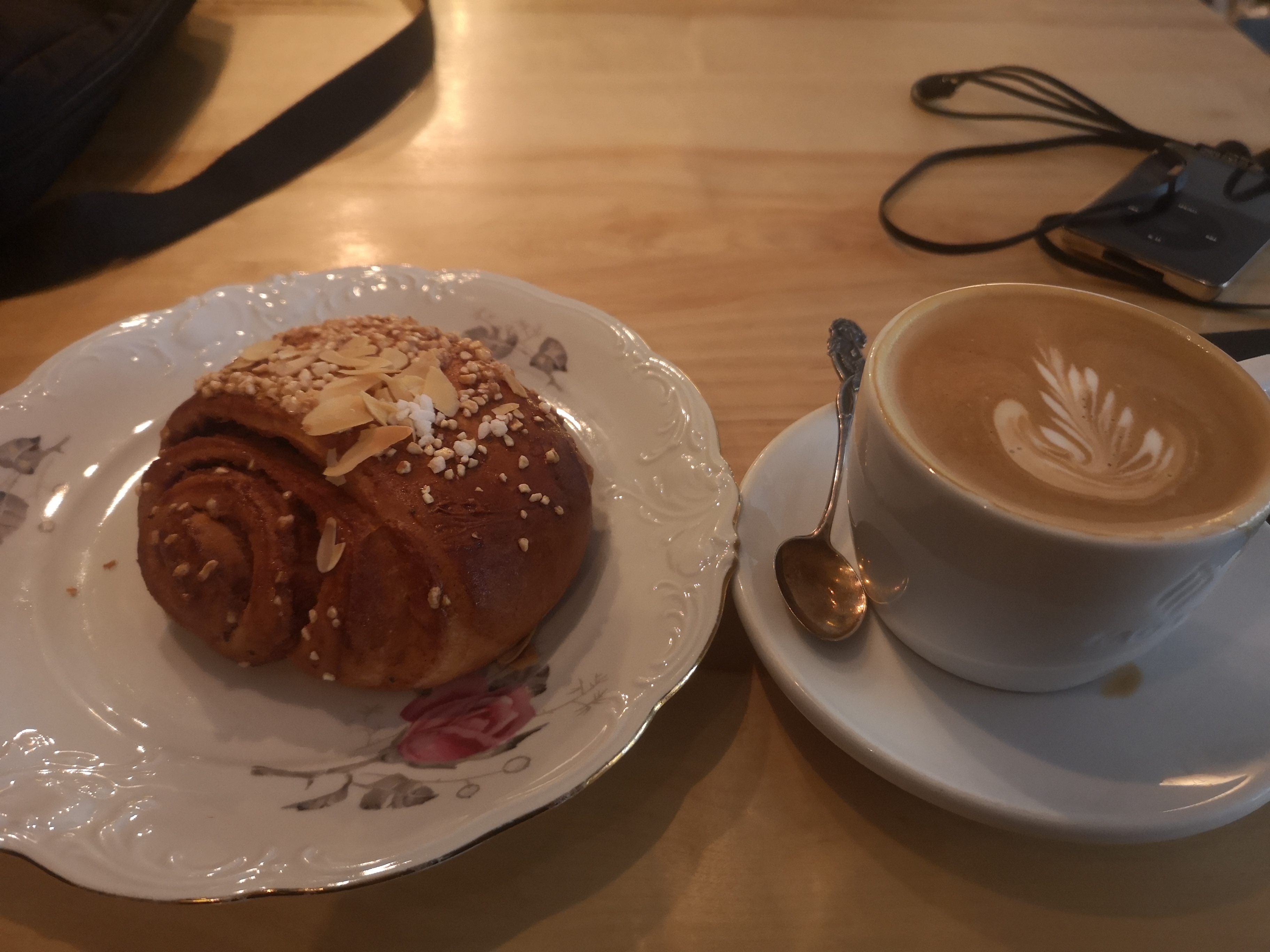
First up we have the tasty Finnish pastry korvapuusti (which means ‘slapped ears’ approximately), it’s essentially a cinnamon bun, but not too sticky and not too sweet like those in North America.
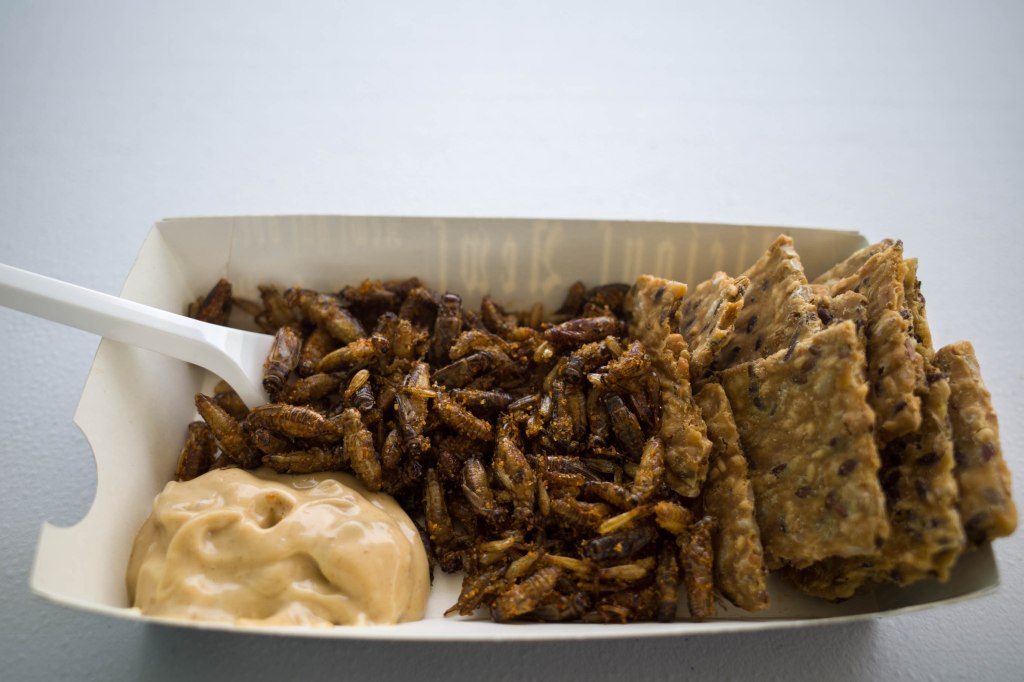
My most interesting culinary experience to date. These are fried crickets, with some sort of sauce, and I think there are crickets in the crackers too. This isn’t a Finnish delicacy or anything, but it may have to become a worldwide delicacy in the coming years. Honestly, they were delicious. I surprised myself by not even hesitating to pop the first one in my mouth and I just chowed down from there. They taste just like any other crunchy, seasoned snack. I also sampled an unseasoned one and it was also good.
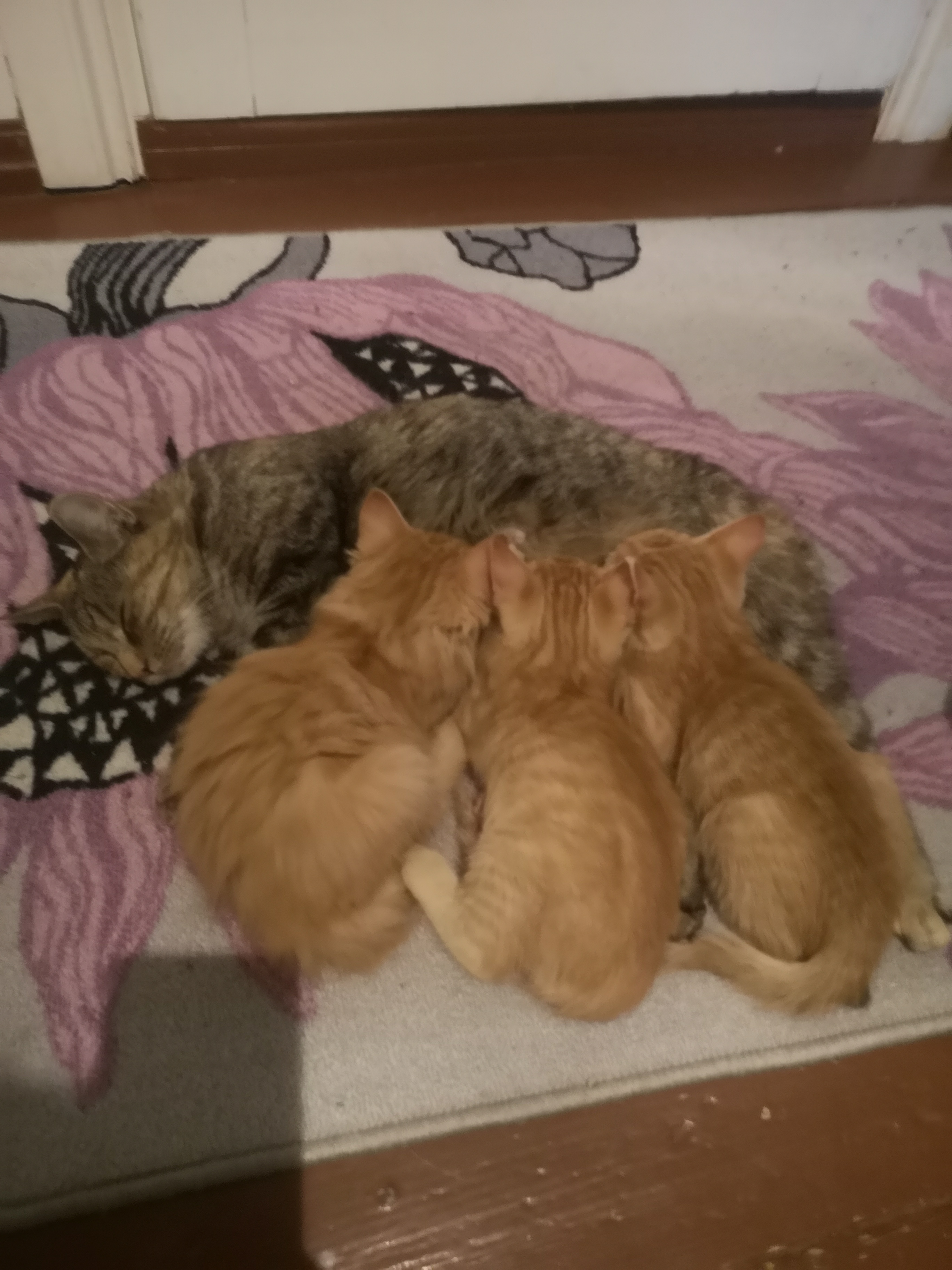
And finally. I stayed at an AirBnB, and this is what welcomed me when I arrived. All the kittens were being adopted that day, but I got a few minutes to enjoy these glorious little critters. Yay!
Next stop, Tallinn, Estonia.
- Tallinn, Estonia
Tallinn is a quick two hour ferry ride from Helsinki. This makes it a very popular destination for Finnish tourists, or more commonly, a destination for Finns to come, get drunk on cheap alcohol, and return to Finland with the maximum amount of inexpensive Estonian booze they can carry. But there is more to Tallinn than the beer, I just can’t remember any of it… I kid, I kid, although I did drink some beer in Tallinn, only it wasn’t the especially cheap kind.
Tallinn has a large and beautiful old town, which is packed full of tourists. It’s nice, and I like medieval buildings of course, but one wonders how many one can see before they all blur together. However I did go all in on the medieval-ness of everything when I went to the medieval themed restaurant III Draakon. Honestly, it was really good. This wasn’t a gimmicky, over-the-top medieval restaurant, it was hearty, simple food, served in a real medieval building, lit by candlelight, with staff dressed in authentic medieval garb. Yum. Luckily there’s more to Tallinn than just the old town. I didn’t make it too far from the old town, but I could see skyscrapers in the distance (something which Helsinki lacks, either to its credit or detriment depending on your view). What I did see outside of the old town was quite something.
I first went to the Museum of Occupation. This tells the story of Estonia’s difficult past as a country occupied first by the Soviets, then by the Nazis, and then by the Soviets again up until the break up of the USSR. Needless to say, this was not an enjoyable time. During Nazi occupation, Estonia became the only (unless I’m mistaken) country to be deemed Jew-free. Although the Nazis then brought more Jews into Estonia to be held in concentration camps, which is slightly ironic and very sad. When the Soviets returned at the end of WWII things continued to be bad, with huge amounts of people being arrested and deported to Siberia or simply executed. The exhibit ended by looking to the future and moving forward, rather than dwelling in the past, which was nice.
The National Library caught my eye because it is a massive, imposing building. Inside it is equally impressive. I just looked it up, and it seems that it was built right at the end of the 80s, so it is, as it appears, a piece of Soviet architecture. It was also designed by the same guy who designed the next thing I want to talk about.
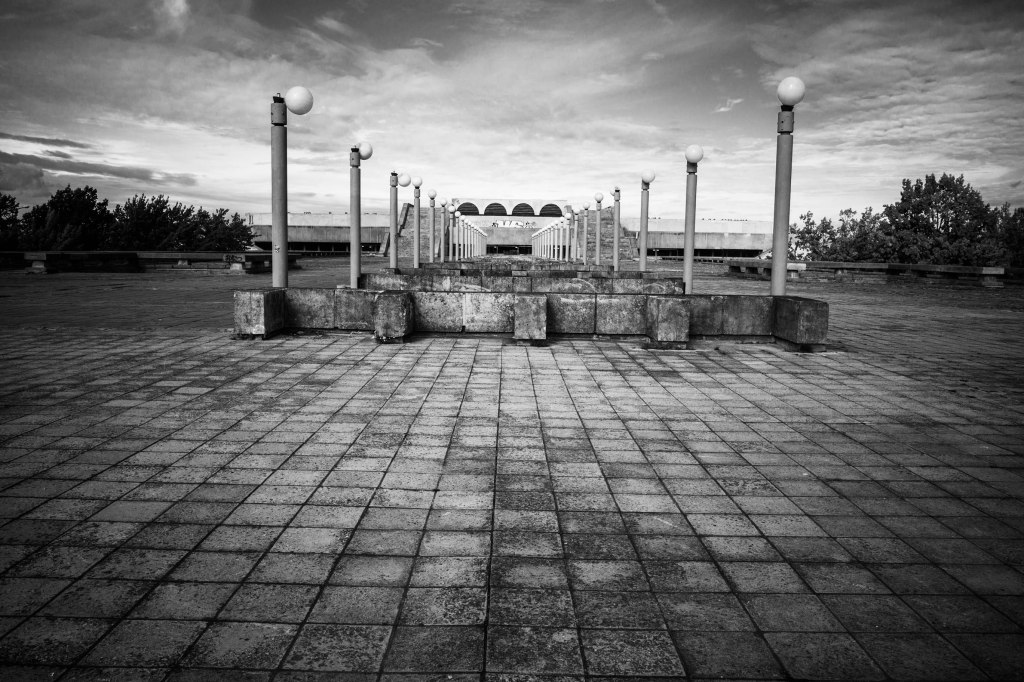
Linnahall was built for the 1980 Moscow Olympics because Tallinn is so close to Moscow (12 hour drive). I don’t know what they were thinking. What it is is an amphitheatre and hockey arena, neither of which are currently open, sadly, but with an exterior that is a massive, brutalist, concrete thing. I guess most of the interior must be below ground, because you can walk around on the exterior in this strange, abandoned plaza and up sets of stairs like you’re ascending some sort of Communist pyramid. It was very cool.
I set out on a bit of a walk to get to one place in Tallinn that I really wanted to visit, and I’ll tell you about that in a moment, but first let me tell you what I stumbled upon on my way. It was a prison. A prison is what I stumbled upon. Upon an old, disused prison I stumbled. This was very cool because the prison was hosting an exhibit about its use during the Nazi and Soviet times as a horrible place for political prisoners and the like. This was an immensely powerful exhibition. I read the stories of what was done there, and who was kept there while standing in the cells and hallways of the prison itself. This was not a pleasant place at all. By the time I made it through I was drained and ready for something less wretched.
Luckily! I was on my way to a brewery when I upon the prison stumbled. So I continued unto there. A couple years ago I had a beer from Estonia in Victoria, BC, and it was possibly the best beer I had ever experienced. A gose that was crisp and subtle and refreshing. This beer was from the Põhjala brewery, which is conveniently located in Tallinn. And it was very good. They brew beer which is easily on par or better than any craft beer I’ve had in Canada.
Tallinn, and Estonia in general, didn’t get much of my time. I would like to see more, but there are so many places I want to visit that I decided to move on. Where am I now? you ask. Well, let’s just say its probably haunted and leave it at thaaaaaaaaaaaaaaaaaaaaaaaaaaaaaaaaaaaaaaaaaaaaaaaaaaa
- Sigulda and The Gauja Valley, Latvia
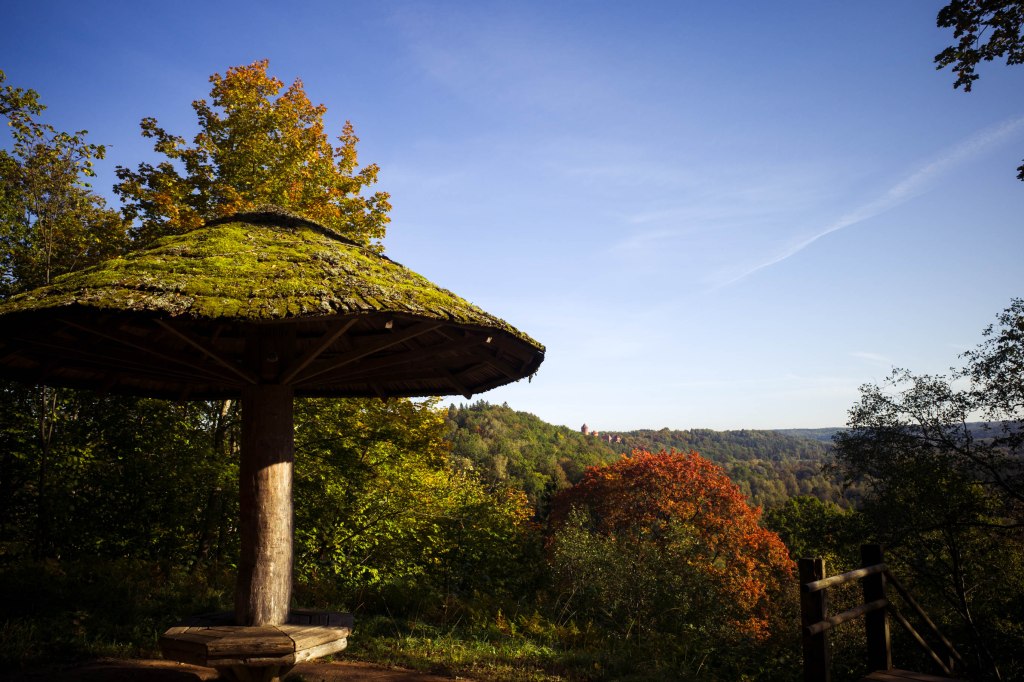
I heard that Sigulda had castles, so I figured I should probably visit. Then I found a fairly unique place to stay while there, so I did visit. It took a 4.5 hour bus ride to Riga, and then over an hour on a train to get to Sigulda, but my adventure was only just beginning.
Sigulda is a town in Latvia’s Gauja National Park. This was the first national park in the country, and it encompasses the Gauja River Valley. A valley is quite the thing to see in a country that is otherwise flat as a flat tire. My lodgings for the next three nights were not in Sigulda however, they were across the valley at Krimulda, an old manor house. So I had a forty minute walk ahead of me. And it was very nice.
The Gauja Valley is heavily forested, and the first hints of autumn’s colour were just beginning to appear while I was there. The walk to Krimulda was a lovely jaunt along forested paths, with wooden stairs assisting me down one side of the valley and up the other. As I descended I could see out through the trees to the other side of the valley, and there awaited the manor house. Pale yellow with white columns. My destination.
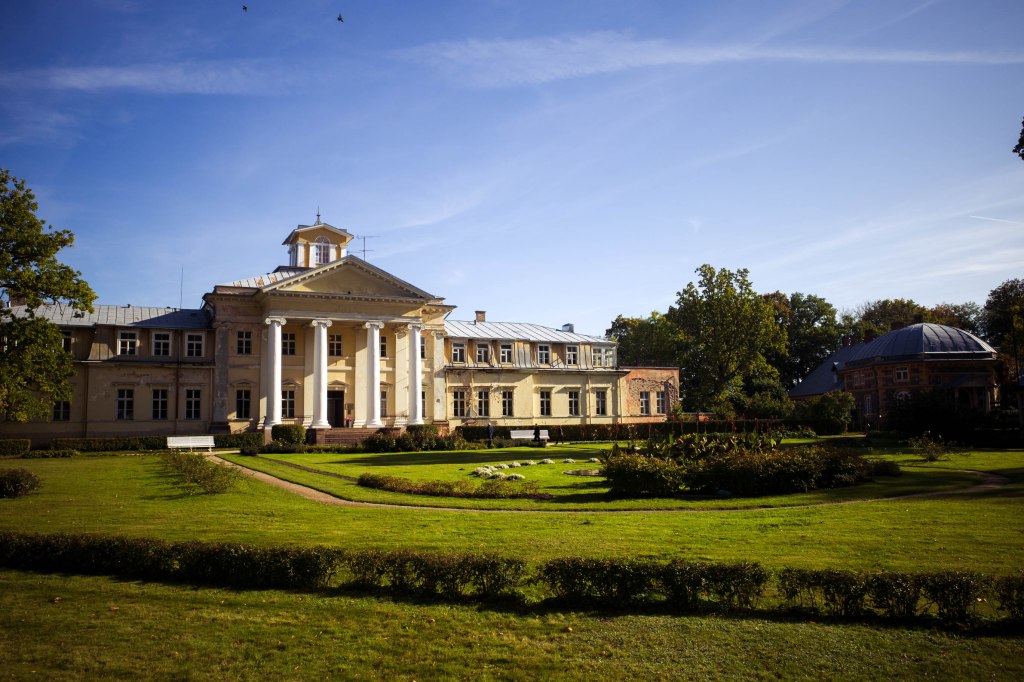
Once you’re in front of the manor you can see the peeling paint, but it is lovely nonetheless. The interior seems to have been redone in the 60s or 70s, and not in a style that has aged well, so the thrill of staying in a manor built in the 1800s quickly fades. Nevertheless, it was a pleasant place to stay. On two of my three nights I was the only person in my six bed dorm, and on the first night I may have been the only person in the building. I did hear some footsteps, but it was probably just a ghost.
It was lovely to spend some time in nature after being in cities for two weeks. I spent a day walking the valley to the various sights and enjoying some sweet solitude. I saw Gutmanis Cave, the largest cave in the Baltics, and it wasn’t super big. It is probably bigger than it used to be though, because for hundreds of years people have carved things into the soft sandstone, supposedly removing up to half a metre of stone. A stream runs out of the cave which is said to have healing properties, but I was not in need of healing, so I continued on.
The Gauja Valley also contains Turaida castle, and the land around it is the Turaida Reserve, which preserves some buildings from the 1800s maybe? I wasn’t paying attention to that, there was a castle to look at. Quite a nice brick castle, in fact. And you can go inside, and climb towers, and experience tight, dark, medieval stairways. It was nice.
I also spent some time in the town of Sigulda itself. It’s a nice small town. The Lutheran church there was rather pleasant, and it is the rare sort of church that lets you climb its tower without an exorbitant fee. There are also the ruins of a Livonian Order castle in the town. The Livonian Order were a branch of the Teutonic Knights, and they were crusaders sent to bring the love of God to the Baltic pagans whether they wanted it or not. The castle was nice though.
I should also mention that there are lots of cats here. I met one at Turaida Castle, I saw one and met one on the walk back from there, and I met two near to Krimulda. It’s wonderful.
- Hills of Lithuania
The Baltic countries are known for being quite flat, and yet in Latvia I visited a valley and in Lithuania I visited two different hills. The first of these was near the city of Šiauliai (the Š is a ‘sh’), so I took a bus there from Riga. I stayed an uneventful night in the city, and the next morning I set out to catch a bus to the Hill of Crosses outside of town.
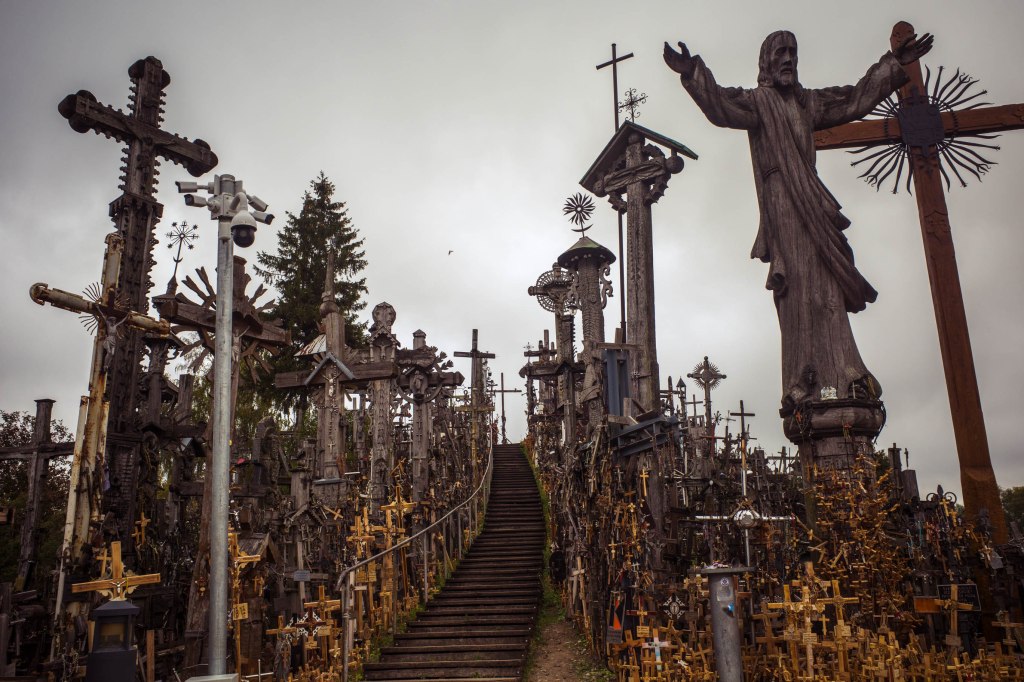
No one knows for sure when people first started placing crosses on this hill, but it’s been happening for around 200 years or so. The original reasons are murky as well, but during the Soviet occupation when the Soviets removed crosses from the hill on at least three separate occasions, placing a cross on the hill became a symbol of Lithuanian identity and a form of protest against the occupiers. Following the collapse of the Soviet Union, no one has removed crosses from the hill, and some estimates put the number of t-shaped objects at over one hundred thousand. It’s really impossible to imagine until you see it.
I arrived fairly early on a grey day, and so I had the hill to myself while I was there. It was a very eerie place. The only sound was the rustling of rosary beads against the crosses over which they were draped. Crosses bristle from every possible inch of the hill and its base. The concentration increases as you climb nearer the top of the hill. Some crosses are massive, beautiful, carved sculptures. Some are small, simple affairs. Some bear plaques and were clearly placed to commemorate something of great import. Some were purchased from the stalls in the parking lot. Near the summit of the hill (it’s really more of a lump to be honest), people have given up on even placing their crosses in the ground and there are piles of small crosses built up around the bases of the large ones. Somewhere someone has hidden a device that is quietly playing a recording of someone speaking. The crosses actually cover two small hills. As I summit the first I discover the second. As I summit the second I discover a field of sheep. The sheep notice me and come to investigate, their baaing finally breaking the spooky near silence of the hill.
Then I caught the bus back to town, and hopped on a train to Klaipeda. For although expressions of christian faith on the Hill of Crosses helped Lithuanians assert their identity during Soviet times, there are traditions here which long predate the arrival of Christianity. If I’m not mistaken, the Baltic area was the last in Europe to convert to Christianity, with some nice friendly crusades to ease the process. The Hill of Witches has been a site for midsummer celebrations, and also contains about 80 wooden carvings spread throughout the forest. To get there, I had to take a ferry from Klaipeda to the Curonian Spit. This is a strange, thin projection of land jutting into the Baltic Sea. Half of the spit is in Lithuania, and half is in Russia. “Russia?” you ask, “surely Russia is on the other side of Lithuania”. Well, most of Russia is, but there is a little exclave between Lithuania and Poland named Kaliningrad, and that is where the Curonian Spit is.
I was quite excited to rent a bike and cycle along the spit to the town of Juodkrantė to visit the Hill of Witches. It would be a lovely ride through the forest, and then I could bike elsewhere on the spit and visit the sand dunes and the beaches. However, when I set out on my journey the rain was absolutely pouring down and I decided that the bus to Juodkrantė looked rather pleasant. The rain did let off a bit, but it was still not a day for biking. Walking was just about fine.
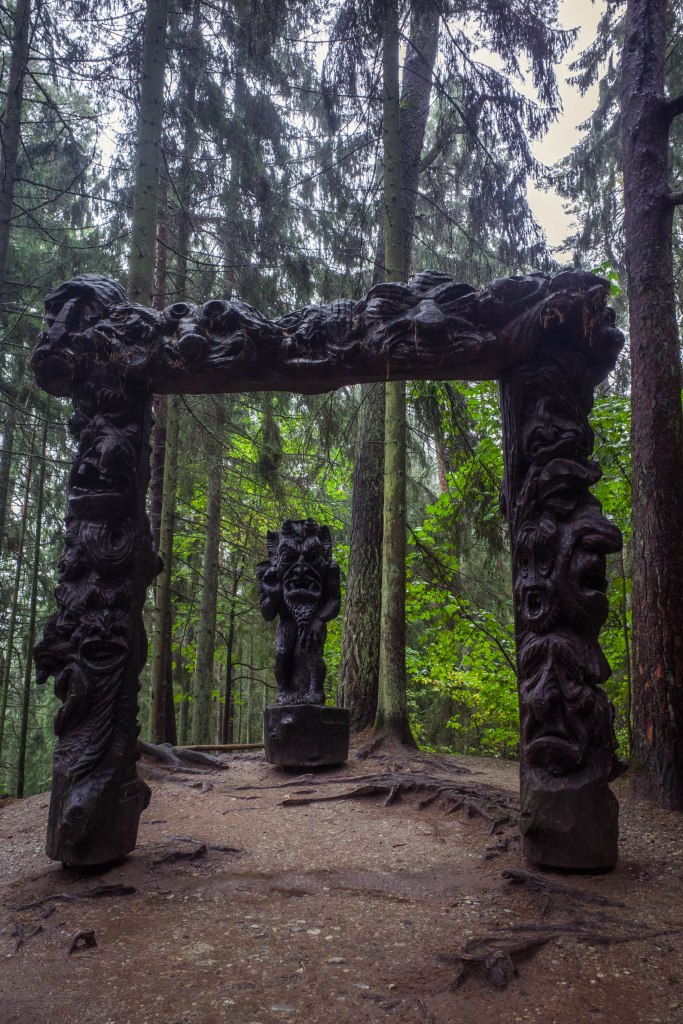
The Hill is a path through the forest. Deep dark woods would be an apt description. The rain adds to the atmosphere. Every twenty or thirty feet is a carving or two, most of them taller than me. I wish I knew some Lithuanian folklore so that I could identify the characters or the scenes depicted. Some are witches, some are demons, some are human. This was a lovely walk through the woods, and I would have enjoyed it even without the carvings. I only saw a couple other people, and was alone for most of my walk, but it never had the eerie feeling of the Hill of Crosses.
Although the rain added to the experience while walking through the forest, it made it quite difficult to see the rest of the Curonian Spit. I can only imagine what an idyllic place it is in the summer. This is somewhere that I will absolutely have to return to in the future, probably to take in a midsummer festival at the Hill of Witches.
Click for photos of:
- Pig Trotters
Last night in Vilnius, Lithuania, I had a very interesting meal. I won’t build suspense because it’s in the title, I ate pig trotters, aka the feet, of the pig, well just one foot actually. I had the option between that and pig’s ears. There were other things on the menu of course, but I had to try one of those two.
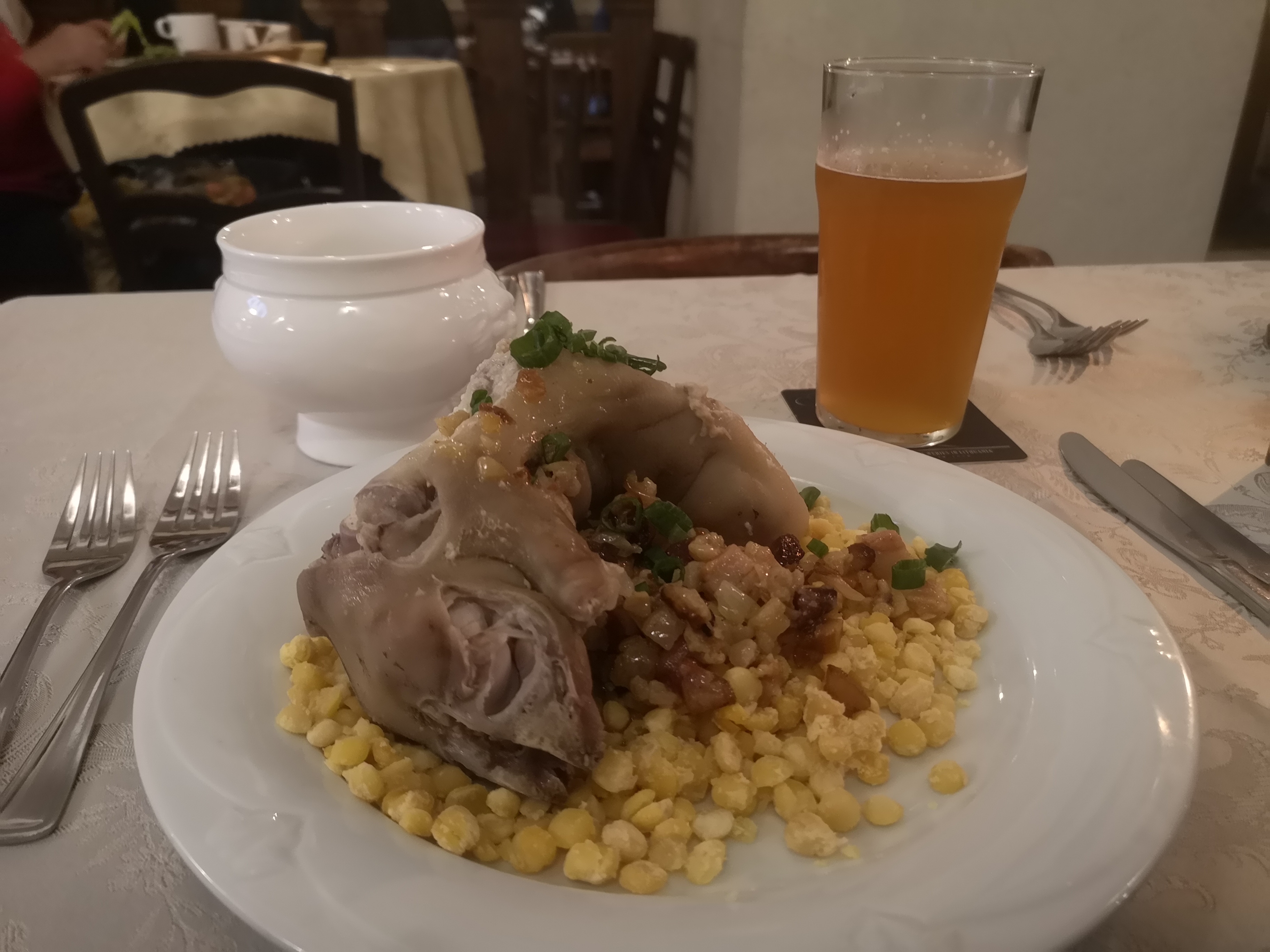
It was…. OK at best. It would have been nice if they’d been fried a bit, so that they had some colour and weren’t just grey, boiled meat. It also would have been nice if they’d been seasoned in any way, I don’t think there was even salt involved. The thing about feet is that there are a lot of bones, and not much meat, so it was a difficult task to separate the edible parts from the bones and cartilage. The ‘edible parts’ were not so much meat as fat and skin, and maybe cartilage is edible if it’s boiled enough. Needless to say, they textures involved were chewy, gelatinous, and rubbery. I ate about 3/4s of it.
You can see in the picture that it is on a bed of peas with some bits of fried bacon. The bacon was good. The peas were a bit dry and I couldn’t bring myself to finish them either. All in all, I am unlikely to eat pig trotters again, but I’m glad I tried.
Until next time, dear readers!
- Minsk, Belarus (Мінск/Минск, Беларусь)
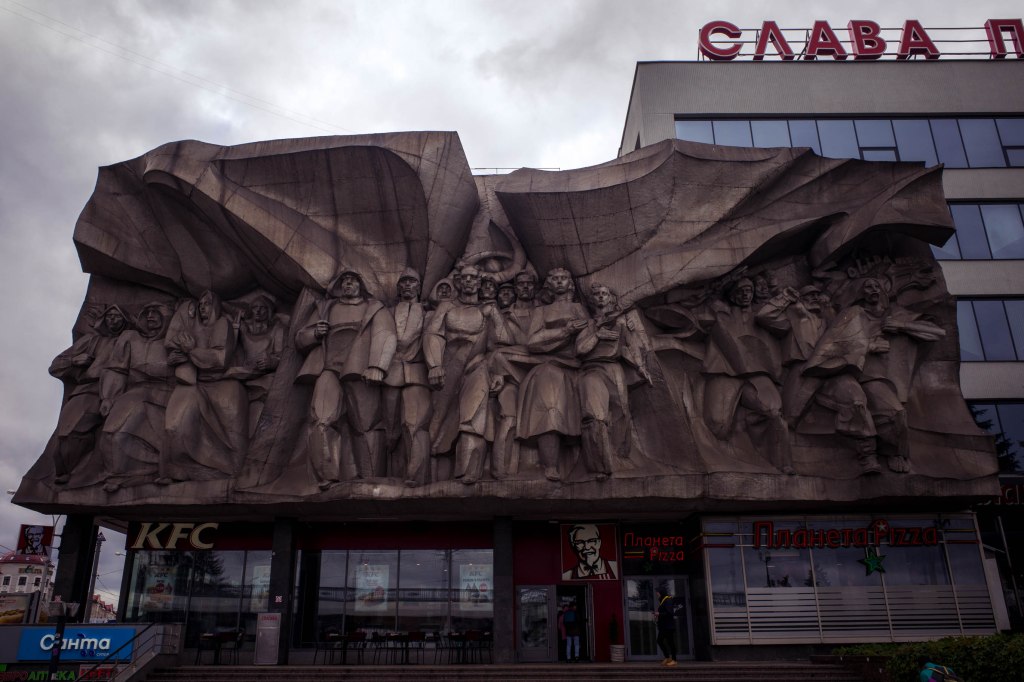
I spent a whole week in Minsk, which was a very welcome change of pace after spending several weeks changing location every couple of days. It was also because I had to fly to get here rather than taking the train or bus, so I wanted my flight to count for something. Canadians need a visa to enter Belarus, unless you fly in and out via Minsk. I really would have preferred to take a train in and out, but the visa process was long and nearly as expensive as flying, so I took the easy route. Besides, it was only a 35 minute flight from Vilnius on the Belarusian airline Belavia, which was quite good, and certainly much more comfortable than a certain Canadian airline that I “Transat-ed” to Europe with…
Entering the country was a very simple process, it was smoother than when I arrived in Stockholm from Canada. There I was asked where I was staying, and where I was going next, and the officer asked to see my ticket for the concert I said I came for. In Minsk, the immigration officer, dressed in a very soviet looking uniform, asked if I was staying in Minsk, looked through my passport, and then stamped it. In customs I had nothing to declare, and I saw no one to declare anything to, so I walked right through. Simple. And I was in Belarus.
Minsk is no different from any other city. Except that there is Soviet architecture everywhere, and you don’t have to look very hard to find a hammer and sickle or a statue of Lenin. But there is McDonald’s and KFC and people go about their lives just like anywhere else. One thing that surprised me was the number of American cars I saw. In Finland an the Baltic countries I barely noticed a single American car, but in Minsk there were suddenly some Fords driving around, which struck me as odd for a country that has been somewhat isolated from the West.
Most of the city was destroyed during WWII, and Belarus lost a third of its population in the war. So a majority of the buildings are from the soviet era or newer. There are a handful of 19th century buildings that survived or were recreated, and they are quite nice as well. I learned a lot about Belarus’s role in the second world war at the Museum of the Great Patriotic War. This is an incredible building which is a massive monument to the war as well as a museum. The exhibition displays weapons and vehicles from the war, but the majority of it is pictures of hundreds of Belarusians who fought in the war alongside some of their personal effects. Many of these were medals, but also cameras, books, daggers, and even spoons for some reason.
The National Art Museum was a perfectly good art museum, primarily featuring art from Belarus from the middle ages to the present. The Cat Museum is like a cat cafe where you can hang out with cats for a while, but this was done up like a museum with famous pieces of art featuring cats on the walls. Without doubt the best museum I saw on my trip was the Museum of Money. It’s small, just two rooms. I’ve seen plenty of coins in museums before, and although I find coins interesting, they don’t tend to capture me in a museum setting. What made the Museum of Money great was the employees. For the very low price of admission, I got a tour of the exhibit, in English, by a very passionate and knowledgeable guide. I now know more than I ever expected to about the history of money in what is now Belarus, as well as some interesting facts about the international currency they have. You’ll see some of that in the photos.
That tour was in English, but people speaking English was far from the norm. Belarus is the first country I’ve visited where getting by with only English and a couple of words in the local language was barely enough. I survived, but before I return I’d like to actually learn some Russian. Nevertheless, everyone I interacted with was friendly and helpful. On the free walking tour I learned that Belarusians pride themselves on being helpful and hospitable, but I’d already experienced that.
I spent a lot of my time in Minsk wandering around, enjoying the soviet architecture, and the large parks. One industrial area has been transformed with massive murals. I walked to the National Library of Belarus which is a pretty incredible building built in the shape of a rhombicuboctahedron. You know, everyone’s favourite architectural shape, the rhombicuboctahedron.
I also spent a lot of time eating. Belarus has some good food. They really like potatoes here. I ate quite a few draniki, which are potato pancakes, sometimes stuffed with meat. And I ate quite a lot of meat in general. I ate Uzbek food for the first time, which was a nice change of pace after all the very lightly seasoned Baltic and Belarusian food I’d been eating. I’d forgotten what spices tasted like. They make a good rice pilaf, and also horse sausage, strongly spiced with cumin. I also drank a lot of coffee, and good coffee too. There are many top notch coffee shops in Minsk which would not be out of place in Canada or Australia. Each time I walked into one I could have been in any big, western city.
And to top it all off, I went to the Opera. For the low price of $8 Canadian I got a pretty good seat for a performance of Salome by Richard Strauss. It was alright. The Opera house is an amazing soviet building. The set design and costumes were excellent. They went for an anachronistic feel, which reminded me of Jesus Christ Superstar, and slightly campy costumes, which also reminded me of JCS. Unfortunately, the singing was not great. I could barely hear most of the male singers. The women, especially the lead were pretty good, but I couldn’t understand anything regardless because they were singing in German and the handy-dandy subtitle things were in Russian.
I did some other things in Minsk, but a week is quite a while. So I will end here.
- Vilnius, Lithuania
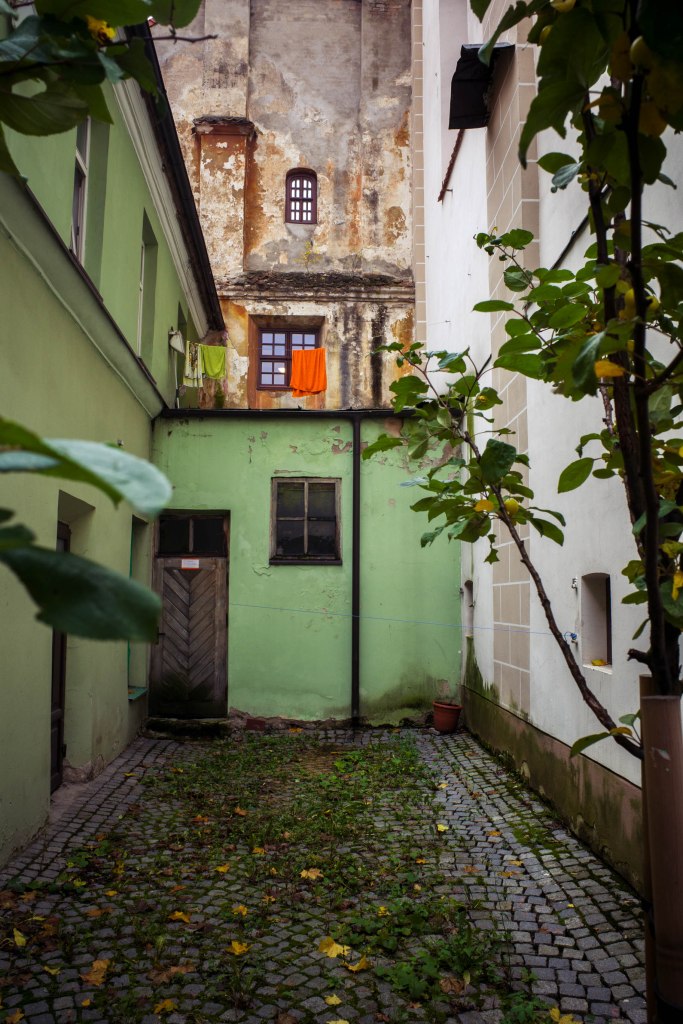
Vilnius is pretty cool. It’s the first city on my trip that begins to feel like what I imagine Prague and Budapest to feel like (I’ll be in those cities soon and no longer have to imagine). Everywhere you look there are church spires, red terracotta roof tiles stretch out before you, and everything is rather nice. Not that every city I’ve been to so far hasn’t been beautiful, they’ve just been less grand.
It makes sense that Vilnius would be nice. It was only the capital of the Grand Duchy of Lithuania, which for a time was the largest state in Europe, encompassing Lithuania and much of Poland and Belarus.
Vilnius Cathedral is the most unique church I’ve seen thus far. It’s built in a classical style and wouldn’t be too out of place in the Mediterranean. I highly recommend taking a tour of the crypts, it’s inexpensive, it’s the only way you can see them, and my tour guide was excellent.
I might not recommend the Museum of Genocide/KGB Museum. It is similar in content to the Museum of Occupation in Tallinn, but not as well presented. The content is good. Lithuania had a very active resistance to soviet rule, first armed and then peaceful; and the KGB prison in the basement is evocative (although again, Tallinn was better… sorry Vilnius), but the information was not very well presented and I found myself growing bored with what should have been interesting material.
Also like Tallinn, Vilnius has an abandoned soviet sport arena, The Palace of Concerts and Sports. It is some top notch soviet architecture, and abandonment and graffiti only makes it more evocative.
There are a lot of good, very modern feeling restaurants in Vilnius. Places with slick interior design and aesthetic menus. Also the food is good. I even went to a vegan restaurant since I’ve been eating mostly meat and potatoes and maybe not enough vegetables for the last month. And it has been one month since I arrived in Europe. Time flies.
The absolute best thing I discovered in Vilnius was a coffee shop. Crooked Nose & Coffee Stories is a micro roastery and coffee shop. The owner roasts very small batches of beans, and only brews them using manual drip methods. There’s the standard Aeropress and Chemex, but also traditional Japanese Nel drip, and a method he developed himself called Bro. Needless to say, I loved it there. The owner (whose name I should have learned) was very friendly and happy to talk about coffee, and the coffee was good. He had beans from Yemen, which I have never experienced before. They come from a British-Yemeni company that works with growers in Yemen to improve their crops and export to the world. It was a rich coffee with notes of dried blueberries, cocoa, and an earthy quality. Good stuff!
- Kraków, Poland
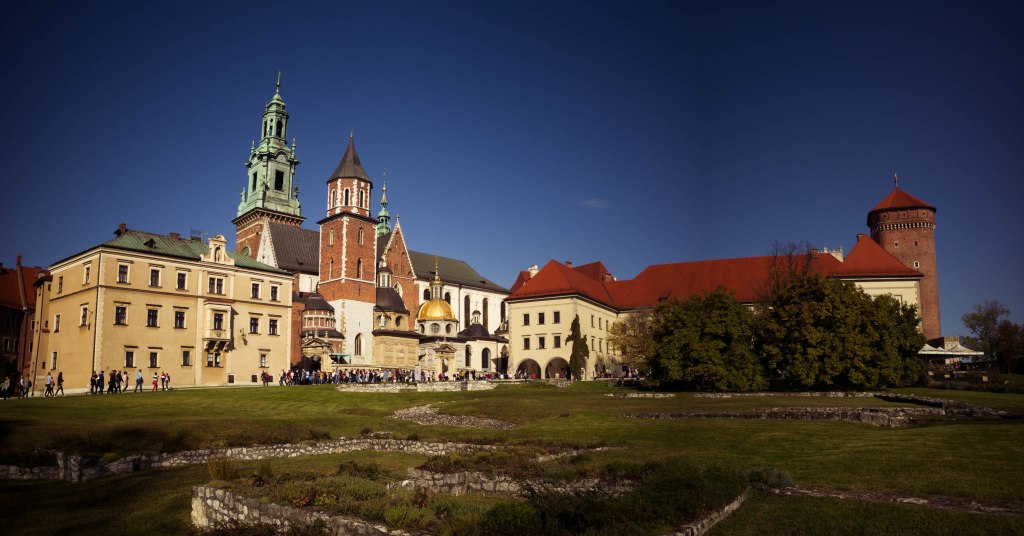
I don’t recommend night buses. I took one so that you don’t have to. Fifteen and a half hours from Vilnius to Kraków, Poland. 11:00pm to whenever the heck I arrived the next day. I severely overestimated my ability to sleep on a bus. Every other bus journey I’ve taken during the day I’ve been nodding off and fighting to not fall asleep and miss my stop. As soon as I had to sleep on a bus however… there was absolutely no chance of it. I think I got maybe an hour over the night. Awful.
Why such a stupid bus ride? I’m not sure. I wanted to get to Kraków and this was a way to do it. The thing about Poland is that it’s quite a large country by European standards, and I wasn’t entirely sure what I wanted to see while there. My main interests are in the countries south of Poland, so Poland is just kind of in the way. Plus I set myself a deadline since there’s a concert I want to attend in Prague. So I skipped over most of Poland and came to Kraków, primarily for a certain infamous nearby attraction, which will receive its own post.
I had two and a half days in Kraków, one of which would be taken up by aforementioned infamy. If you ask the internet what to do in Kraków, drinking is recommended. There are a lot of bars here. I’m not in Europe to party my way across the continent, so I was leery of this suggested activity. However, it was a Saturday night, and a couple of Brits in my hostel room roped me and an American into a bit of a pub crawl, and we had a very good time.
Our hostel was right next to the Jewish district of the city, which is a very nice area with a bit of a gritty, grimy vibe to it. One of the Brits had researched the best bars in the area, so he led us through a selection of very nifty bars, all within approximately two minutes walking distance from each other. The bars all had very good atmosphere and were much more interesting than your average drinking establishment. One, called Singer, lived up to its name by using Singer sewing machines for every table. Two bars in particular stood out. One was a Communist themed bar. Inside was dark and dingy, a portrait of Lenin gazed down from the wall, you could smoke inside even though its not legal in Poland. There was also a secret bar, the entrance of which was at the back of an “out of order” toilet in another bar. This was super cool not only because it felt exclusive, but also due to the drink menu. Each cocktail they had available was represented by a piece of art by a local artist, with no ingredients listed. You simply picked the art that stood out to you and received the corresponding cocktail. Very cool.
I also ate some food whilst in Krakow. Pierogies of course, which are incredibly budget friendly and delicious. Kielbasa and blood sausage from a street vendor, both delicious. And a popular pretzel which was big and bready.
I barely took any pictures while here, but I saw some neat things. The aforementioned Jewish district was very nice. The old town was quite magnificent, and there was a lot going on. At 13:00 somebody played a trumpet from the top of a church tower. Then, a children’s marching band played Sweet Caroline in the main square. At the palace I saw something I never thought I’d see in my life, and probably never will again. Dragon Bones. They were incredible. Massive, unbelievable bones hanging outside of the cathedral at the palace. They belonged to a dragon that used to live in a cave beneath the palace. Naturally, I was skeptical at first, but having seen the bones I can only conclude that they must belong to a dragon. No other animal could possibly have such large bones.*
I’m currently on a train to Prague to see a concert tonight, and I guess the city might be worth looking around. Keep an eye out for my next post which will be about Auschwitz, although I’m not sure what to write about such a place.
Oh! I almost forgot to mention. In the Baltics the temperature was getting down to about 10°, and it was grey and a bit rainy, and in Belarus it even hit 0° on one day. But I arrived in Krakow to 20° weather and sunshine, so things are looking good.
Click for photos. (The few that they are)
* okay okay they’re petrified whale or mammoth bones
- Auschwitz-Birkinau
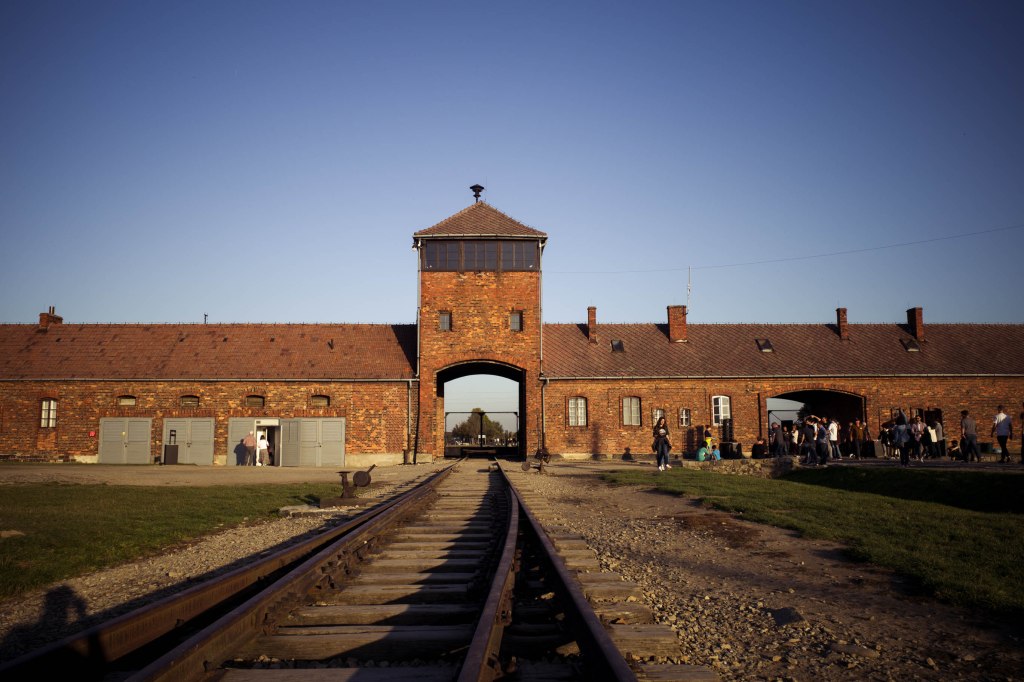
I don’t know what to write about Auschwitz. It’s the most important place I’m likely ever to visit. All I can say is this. Visit Auschwitz.
We all know the horrors of the Holocaust, and the incredible evil that humans are capable of, but for most of us it is a very abstract concept. Auschwitz makes that knowledge a little more real. Now, more than ever, it is important for everyone to remember the past and learn from it and ensure that it stays in the past.
I’m not going to tell you about Auschwitz, you can look it up if you want to know what I saw there. Better yet, go see it yourself.
Visit Auschwitz.
- Prague, Czechia
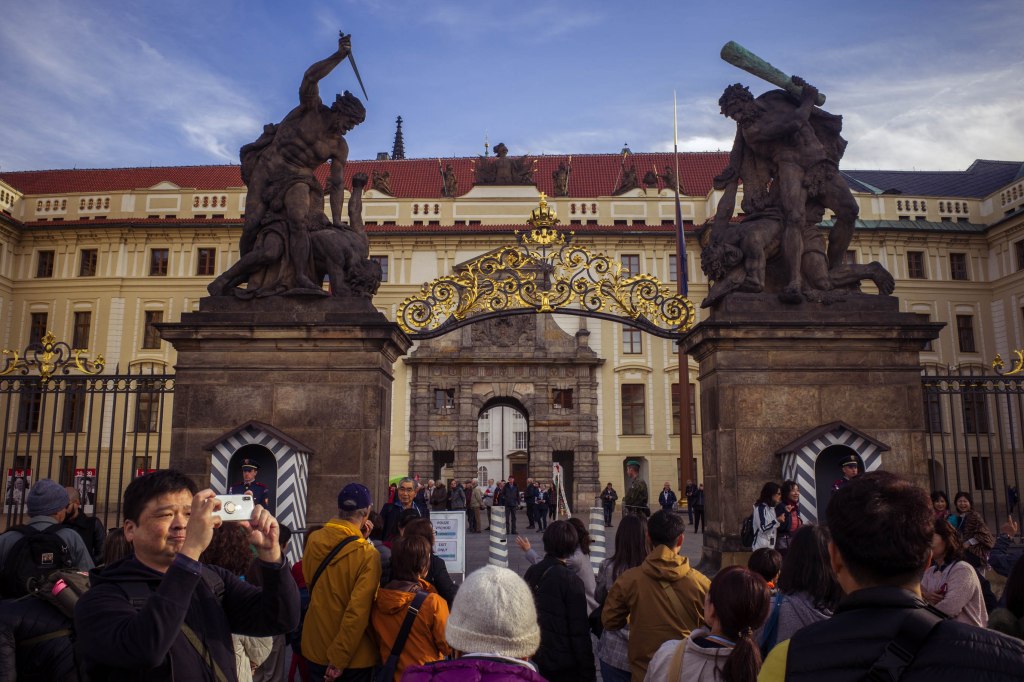
Prague is just as beautiful as everyone says. It’s impossible not to look like a tourist there because your gaze is constantly pulled upwards to the incredible architecture looming overhead. Prague is also my least favourite city so far. You’ll want your gaze pulled upwards because at eye level all you’ll see are hordes of tourists and tourist traps. Admittedly, as a tourist, I am part of the problem, but I wish I hadn’t been.
I’ve been getting a little bit off the beaten path on my trip so far, but I’ve still been going to tourist sites. Prague has sadly taken touristy to the next level, and it was far from peak season while I was there. You’ll see in some of my photos just how packed the city was. It’s been years since I’ve been in Paris, but I don’t remember it being this crazy.
There was still some good however. St. Vitus Cathedral is a beautiful, looming, Gothic cathedral with one of the best interiors I’ve seen in a church. A towering vaulted ceiling is illuminated by sunlight sparkling from resplendent stained glass. It was pretty nice. I even managed to find an excellent attraction that was free of charge(!), which felt miraculous in Prague. I stumbled upon the St. Cyril and Methodist Cathedral, so I took a look inside. It was there that I discovered the church had a crypt, with free entry! Not only was it a crypt, but it was a crypt of historical significance. During the Second World War seven resistance fighters hid out and then fought their last stand in the crypt after assassinating the Nazi in command of Czechoslovakia. They had detailed information about Czechoslovakia during WWII, the plan and execution of the assassination, the horrific retribution of the Nazis upon the populous, and the eventual betrayal of the assassins’ location.
While in Prague I also made a day trip to the town of Kutna Hora, renowned for its ossuary. This was a chapel which has been decorated with bones and skulls. Basically, graveyards run out of space so they dig up the bones to make room and they store them inside. Soon, there are so many bones inside that they need to stack them neatly for efficient storage. Whoever’s tasked with stacking the bones gets bored and creates art out of them, such as a chandelier and a coat of arms. The church doesn’t mind this macabre display because it serves as a memento mori, a reminder that we will die, so we should lead a good life (although why bother given that Jesus has died for all our sins). Anyhow, I enjoy the macabre, so I enjoyed Sedlec Ossuary. If you don’t like the macabre, too bad. There’s even more dead bodies in the future of this blog.
In conclusion, don’t go to Prague.
- Brno, Czechia
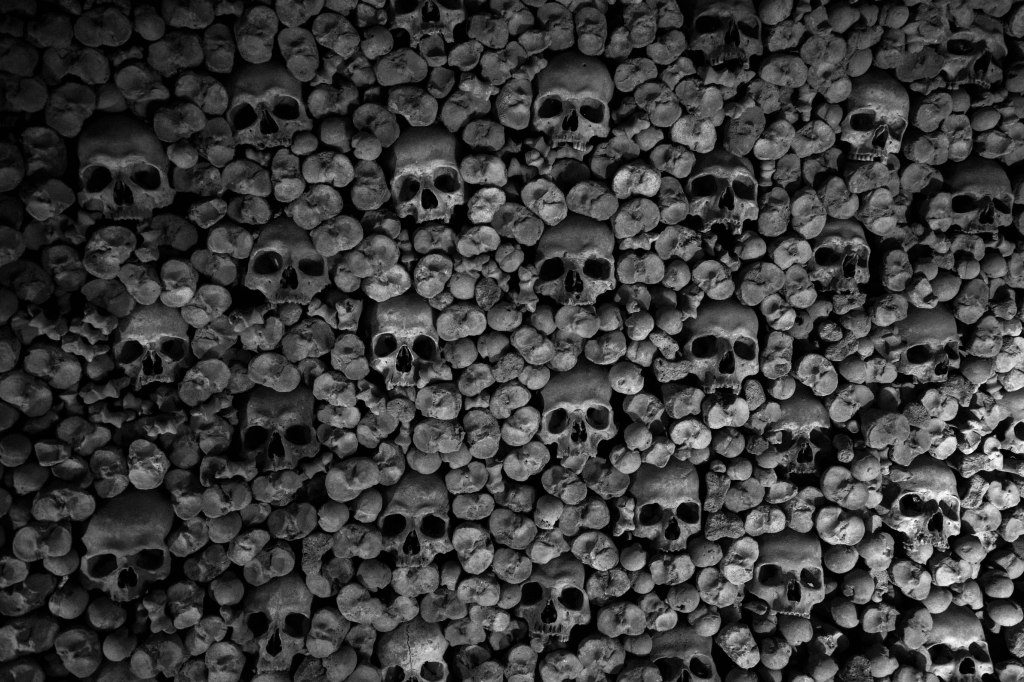
I went to Brno for two reasons. The Capuchin Crypt, and the Ossuary. Nothing but death in this post.
The crypt is beneath the Capuchin monastery. Throughout the years the brothers as well as some benefactors of the order were buried in said crypt. The benefactors in coffins, the brothers simply laying on the ground with a brick under their heads as dictated by the order. Rather conveniently the crypt turned out to be a nice dry environment in which the bodies slowly dried and were mummified rather than decomposing, and there they remain. The mummification wasn’t perfect of course, so the bodies look pretty wretched today, somewhere between mummies and skeletons.
The Ossuary in Brno is apparently the second largest after the Paris Catacombs. Naturally this piqued my interest. Unfortunately, while it’s true that they did find the most bones stored in tunnels under the city, they removed most of the bones and what you can visit today is quite a small area that really lacks authenticity. Nevertheless, there were piles of bones and skulls, so I enjoyed it.
- Bratislava, Slovakia
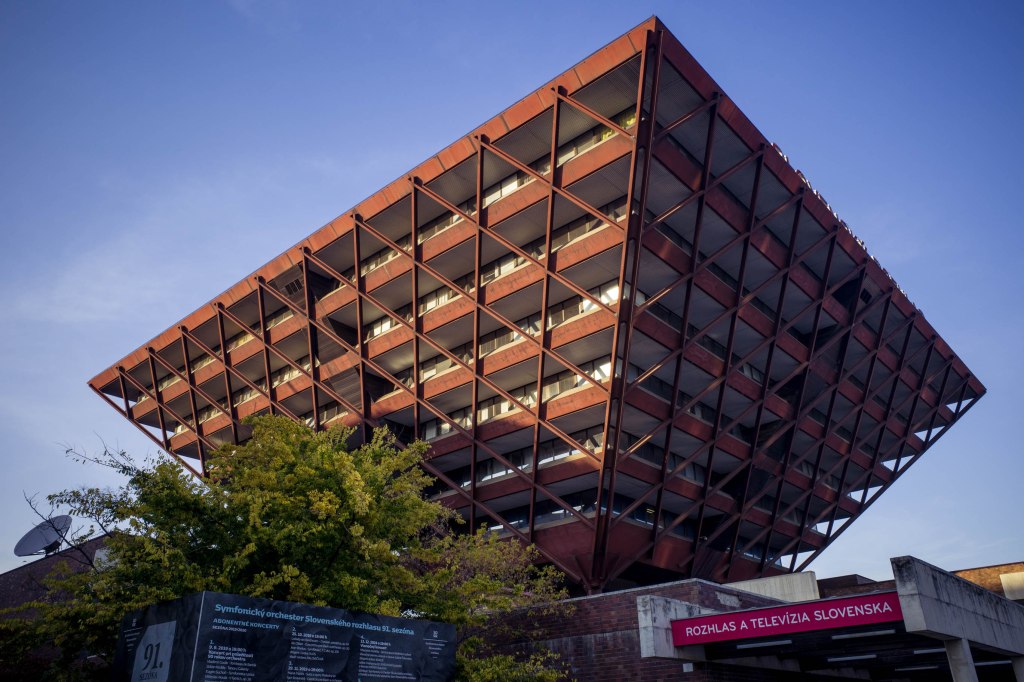
I zipped quite quickly through Bratislava on my way to more remote areas of Slovakia, but I managed to enjoy my time there nonetheless. It’s a fairly small, quiet city, which was just what I needed after the hell of Prague. Maybe Bratislava could use some sprucing up, but then it might become boring.
I was wandering the city centre with no real plan for myself, when I heard the sound of English being spoken. I had stumbled upon a free walking tour that was just about to begin, with a guide who sounded entertaining. It was a 20th century tour of the city, WWII and communism in other words. Perfect.
So I found myself walking round the city learning about the fun times of communism and seeing the beautiful Communist buildings.
The Communist government was sneaky, rather than anger people by destroying churches, they planted nice trees that would obscure the church from view. They built a beautiful central square, but made it inconvenient for gathering in, with an incredibly noisy fountain and metal benches that were either scorching hot or freezing cold. But they also had free university, if you could prove you were a good communist, and there were many clean, safe, public toilets, which fell into disrepute after the fall of communism and today have been transformed into bars and coffee shops.
The Slovakian Radio and Television building has been listed as one of the ugliest in the world. Some people are just afraid of anything that is different. This inverted pyramid with a metal exoskeleton is a very handsome building. Not only that, but those crazy commies actually built excellent recording studios inside of it. So good in fact that acclaimed film composer Hans Zimmer records many of his soundtracks there, and every country’s national anthems for the Olympic Games are also recorded within.
The Slavin War Memorial is the largest war cemetery in Central Europe (I’m not in Eastern Europe yet folks!). Six mass graves contain about 7000 soldiers of the Red Army who died liberating Slovakia from the Nazis. Liberating may be a strong word for ‘exchanging Facism for Communism’ but it’s a nice war memorial.
The city also has an old town (as usual), and a castle, but I didn’t get a chance to see much of that. You have to pay for the castle, so it’s no great loss. I’ll talk to you next time from the High Tatras. Good day.
- High Tatras, Slovakia
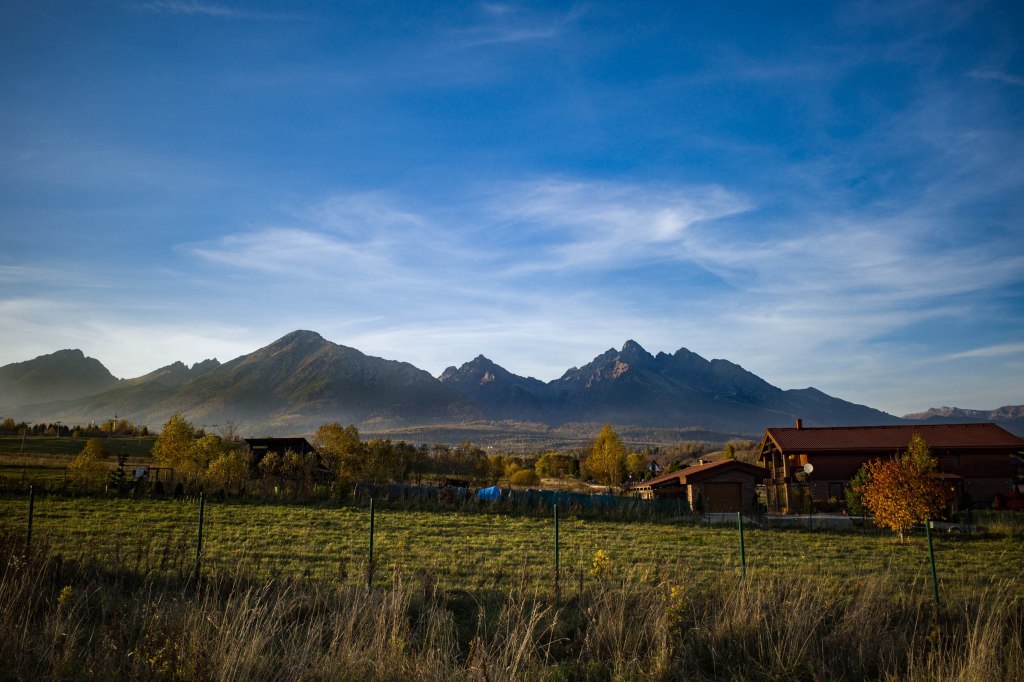
I took a short break from the cities and took myself to the
mountains for some relaxation. I found a place to stay in the village of Nová Lesná, nestled at the foot of
the High Tatra mountains. The Tatras are jagged, rocky mountains without much
in the way of foothills, so they rise without warning from the gently rolling
hills below. Having spent time in the Canadian Rockies, the High Tatras are
familiar, but small in comparison. They are no less beautiful however.I did some light hiking of course. I never made it to any spectacular locations because I didn’t know where I was going or how long it would take to get there. I simply found a trail, which was well marked, and set off along it until I figured I should head back. Maybe there was something incredible just around the next corner, but I’ll never know. I was still hiking in beautiful landscapes, I just never reached a destination.
There are definitely huts further into the mountains, so you
could go for several days walking from hut to hut. I also suspect that the huts
are well stocked, as I saw several porters carrying massive loads of supplies
along the trails. Presumably there was food in their styrofoam coolers, but
they were also carrying kegs of beer and boxes of wine.After so long being primarily in large cities, especially
after the busyness of Prague, it was a delight to spend time in nature and in a
small village. I think I’ve recuperated myself fairly well. In fact I need to
have done so, since my next stop is Budapest, and I’m gonna go out on a limb
here and say that it will be a little bit busy itself.Time is flying by. I’ve been in Europe for a month and a half now. I’ve seen so much. Nine different countries, seventeen ‘places’, and many a train and bus. And yet there is so much still to see. I’ve barely scratched the surface in the places I’ve been too, and I’ve yet to step foot in the Balkans. So, if all goes well I’ll be in Europe for some time yet. Thanks for reading.
And thanks for looking at the photos, which you’ll find here.
- Budapest, Hungary
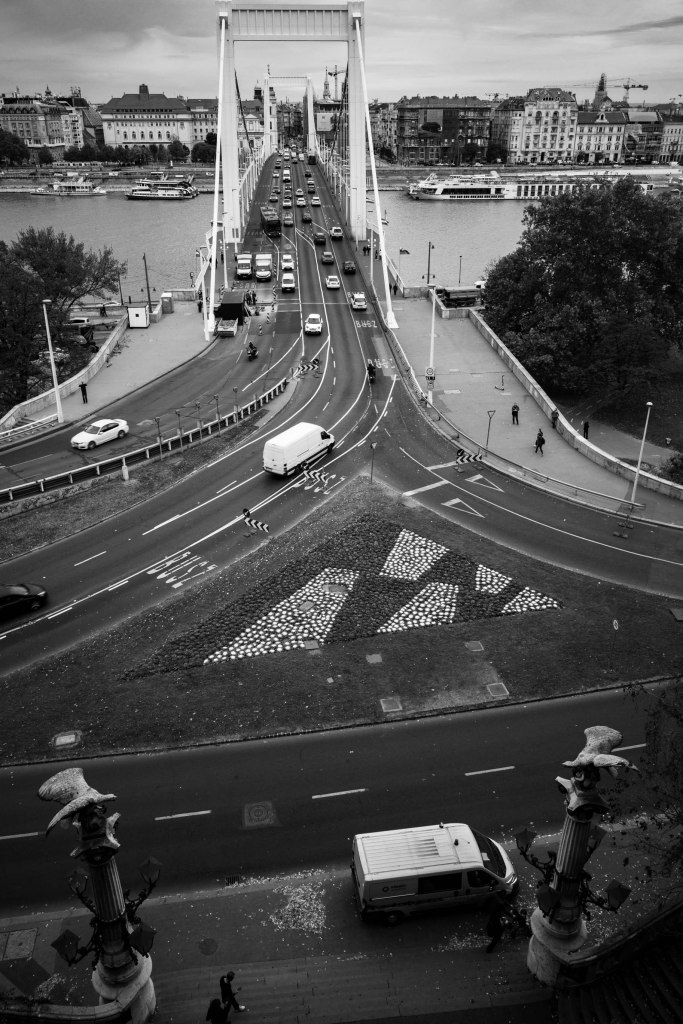
Budapest is great at night. It’s a very safe city, but the street lights are so dim that you feel like you’re in the deep dark bowels of a dangerous metropolis. Very atmospheric.
It’s also great during the day. You may recall that I disliked Prague for being too busy. Budapest is also quite busy, but it feels like a real city for people to live in, and not like a massive tourist theme park. It may help that the big sights are a bit more spread out, so its tourists aren’t all jammed quite so close together.
There’s lots to see in Budapest. You could spend an entire day just wandering around the castle district atop its hill on the Buda side of the river (Budapest used to be two cities named Buda and Pest, on either side of the Danube). There are ruined castle walls, a palace, churches, and a beautiful view of the Pest side of the river. Near the castle is an even larger hill, a forested park, with the massive freedom monument commanding the city from its summit, a woman holding a feather gazing across the city. It’s a good walk to get up there.
I found a pinball museum, and took a break from the busy city to refresh my senses with a series of rooms filled with over one hundred pinball machines, all of which were playable. Of course they weren’t all being played at once, but it was a noisy place, and a fun place. I’m not much good at pinball, I don’t have much practice, but it sure is entertaining. It was nice to do something outside of the ordinary travelling experience.
I haven’t talked about food in a few posts. Czechia and Slovakia didn’t have bad food, but it wasn’t anything to write about. Hungary on the other hand, has very good food, and very good prices. You may have heard of goulash, it’s very tasty. Chicken paprikas is chicken in a creamy paprika sauce, served with funny little noodles. Or you can have it with palacsinta, which are basically crepes, which of course you can also have for dessert with chocolate or jam. All delicious, all affordable. You can get a meal with a beer for $8 Canadian or under, including a tip.
Speaking of tipping, up until Czechia tipping wasn’t a thing in the countries I visited. These last few countries however, a 10% tip is the polite thing to do. It’s tricky though. If you’re paying by card you have to tell your server how much to charge you. Debit machines don’t have a function like in Canada where it asks you how much you want to tip and you punch in an amount or a percentage. So you look at the bill, figure out 10%, add it to your total, and ask the server to charge that much. Except that for some reason the servers always enter your total into the machine the moment they give you the bill, as if they don’t want a tip, and I feel rude saying, “no no, cancel that and charge me this much please”, so mostly I’ve been tipping with spare change.
Well there you have it, an all too brief stop in Hungary and I’m off again. Szia!
- Cluj-Napoca, Romania
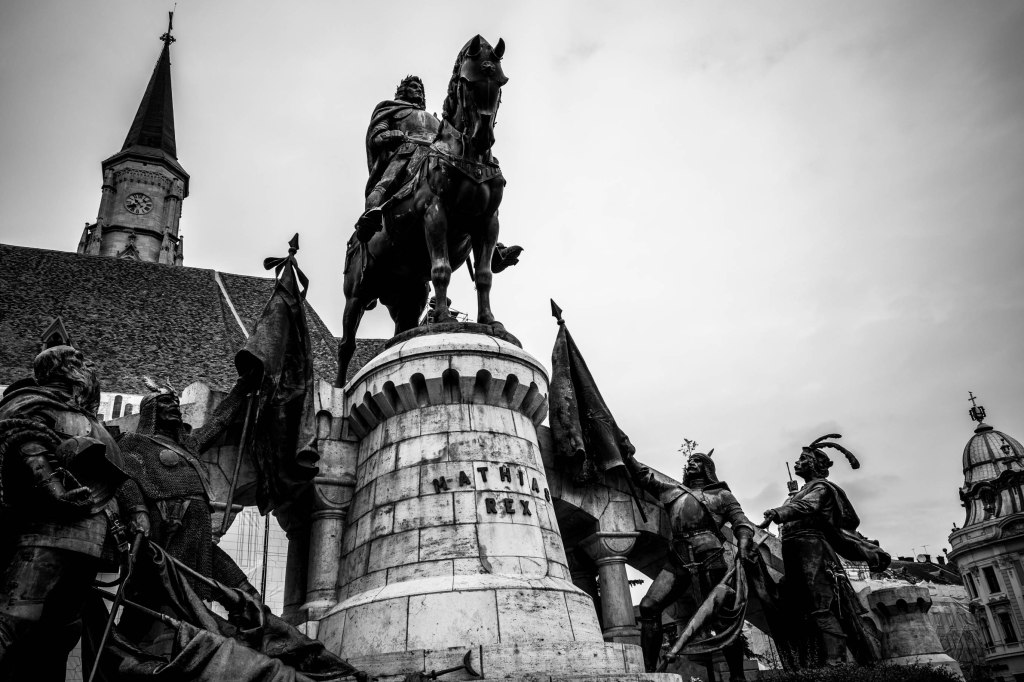
It was an eight hour bus ride from Budapest to Cluj, half of it in the dark. I saw very little of the Romanian countryside on account of this, which is a shame. I was especially sad for the darkness because the roads we drove once in Romania felt quite exciting. We drove downhill for quite some time on a narrow, winding road full of switchbacks and tight corners. I suppose the darkness added to the excitement of the drive, as all I could really see were the headlights of oncoming traffic.
And then I arrived in Cluj-Napoca, Cluj for short, largest city in a certain region of Romania you may have heard of before, Transylvania… Ever since arriving I must admit I find myself less sanguine than usual. I feel somewhat drained. I awaken in the morning feeling weak and somewhat faint. I shy away from the sun…
I only kid. I feel just fine and there are absolutely no vampires here. I cannot stress enough the fact that everything is normal.
Cluj was under construction, or renovation I suppose. The cathedral was shrouded in cloth, another large church was infested with scaffolding, and the purportedly stunning ‘mirror street’ in which both sides of a street are identical, is somewhat lopsided with one half being refurbished. It was an interesting city to spend some time in nonetheless. Fairly quiet, good coffee, small streets and wide avenues. I spent an afternoon walking in a park on a hill, trying not to trip on the decaying concrete paths and steps. There were a couple dozen strange concrete cylinders jutting out of the ground on a hillside. They extended about half a meter above the ground, and since many were missing their tops, I could see that metal rungs set in to the walls allowed you to climb several meters beneath the surface, not that you’d want to with all the empty bottles people have thrown in them. Perhaps the cylinders were once sarcophagi for the vampires which used to roam this land. I do not know the answers.
I ate a rather interesting food here, from an etymological point of view. Plăcintă is a disk of dough filled with cheese, potato, or cottage cheese. They were available from the windows of little shops for about one dollar and were rather tasty. The name plăcintă comes from the Latin placenta, meaning cake. You may also associate placenta with something else that is not a cake. However, it would seem that the term placenta in English got its meaning because it resembles, in shape if not in colour, a flat, disk-like cake such as a plăcintă. There’s your fun fact for the day, now go away.
- Chișinău, Moldova
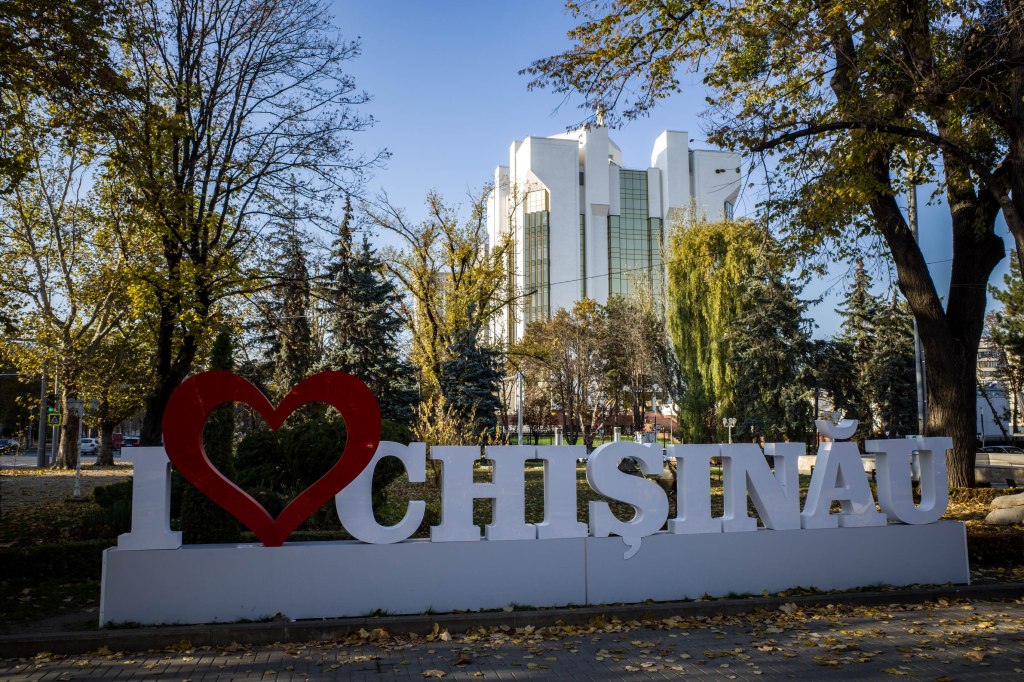
Chisinau could use some sprucing up. In fact, when my bus crossed the border from Romania into Moldova the roads instantly became bumpier. As we bumped along the road to Chisinau we passed other road users such as cars, and trucks, and horse carts. Dilapidated could be one word to describe the city. The sidewalks are cracked, uneven, decaying, you always need to watch your step.
And yet it’s quite nice here. People are friendly, there’s some things to see, some lovely parks. I wandered the city, taking in the atmosphere that is very pleasant despite the disrepair of the streets. And of course the interior of shops and restaurants is modern and clean and nothing like the exterior. In the centre there is a massive indoor and outdoor market, where you can buy everything from cheese and fish to clothes to bed sheets, and the amount of produce for sale was a breath of fresh air after the sad selections in many grocery stores I’ve been in recently.
I visited the National Museum of Ethnography and Natural History, a ticket for which costs less than one dollar. I think it would have been a top notch museum maybe 30 years ago, and it’s still quite good, but not very modern. They have a huge collection of taxidermised animals, and fossils, and info about the geography of Moldova, as well as the history of people in the area from the stone age till the present day. I probably would have learned a lot if there had been any info in English. It didn’t help that since I arrived with only 45 minutes till closing there was a strange old man shooing all the visitors to follow the same route and hurry up so that he could turn off the lights in each section after us. But as I said earlier, $1.
I was very happy to find a bar serving Moldovan craft beer. It was surprising to find, and even more surprising that there was quite a good selection of quality beers. Moldova is known for their wine, so I certainly didn’t expect a menu of 20 different beers from 4 local breweries.
A highlight of my time in Chisinau was exploring an abandoned observatory. Right next to the main road and the University of Medicine is a building with all its exterior walls removed. Upon climbing to the top floor there is a tower leading into the dome of an old observatory. The building is covered in graffiti and piled full of trash, and it made for a fun bit of exploration.
Well, that’s about all I have to say about the least visited country in Europe. Join me next time for an even less visited country in Europe.
- Tiraspol, Transnistria
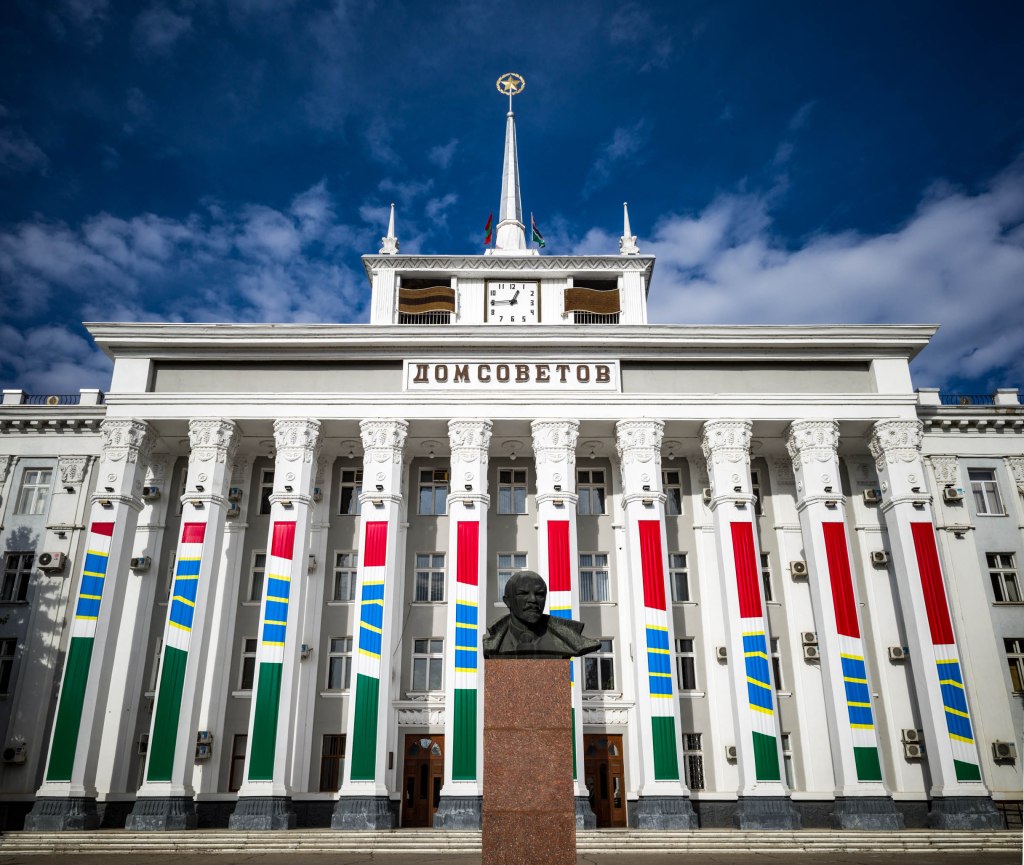
Bang! Bang! Bang!
I’m walking down the street in an unrecognized country in Eastern Europe. It is night time.
Eight hours earlier I was boarding a minibus in Chisinau, capital of Moldova. Minibuses, or marshrutkas as they are called in Russian, are a very common form of transport in this area of the world. It’s like a large van, seating about 15-20 passengers. My minibus goes to Tiraspol, capital of the unrecognized republic of Transnistria (Pridnestrovie in Russian).
Moldova was a part of the Soviet Union. With the collapse of the USSR, the Moldovans, who are primarily of a similar ethnicity and culture to Romania, began to set up their own country. In the east of Moldova, across the Dniester river, the ethnically Russian population were not happy about this, so they formed their own country, Transnistria.
A short war later and they were still part of Moldova. Since then they have operated as their own independent country. Although Moldova considers Transnistria to be part of itself, they have essentially let the state be. Transnistria has its own government, currency, and even passports (although most citizens have Moldovan or Russian citizenship as well). No countries recognize Transnistria. Three other unrecognized countries recognize Transnistria. Abkhazia, South Ossetia, and Artsakh. Despite its status, and unlike other unrecognized countries, Transnistria has been conflict free for years, making it an ideal destination to travel if you want to get off the map a bit.
As I waited for my minibus to leave the station, who should arrive but two other travellers who were at the same hostel as me in Chișinău, and would be staying at the same hostel in Tiraspol. Hearing us speaking English, a lady on the bus strikes up a conversation. Her English is excellent. She works in Chișinău and is returning home to Tiraspol for the weekend.
The bus sets out. I’ve mentioned already that the roads in Moldova are bumpy. Most of the journey is on a two-lane road. Traffic generally drives half in the lane and half in the shoulder, allowing cars to pass down the centre line regardless of oncoming traffic. Some of the journey is on a three-lane road where the centre lane is seemingly reserved for passing in both directions. It’s exhilarating.
We arrive at the border. Most of the passengers on the bus must be Transnistrian because they don’t have to do anything. Us foreigners get off the bus and head into the tiny immigration office. Our new Transnistrian friend comes along and speaks to the officer in Russian for us. There are no problems. It would have been fine without her help, but a few years ago we likely would have had to navigate bribes and poor communication. They don’t stamp your passport here. Instead, you get a slip of paper with your details to keep with you until you leave. We have arrived in Transnistria.
Immediately after crossing the border the roads improved. I guess Transnistria is putting the money they receive from Russia to good use, while in Moldova who knows where the tax dollars go. That being said, the capital Tiraspol is fairly similar to Chișinău. Slightly better sidewalks, and more statues of Lenin being the main differences. Oh, and it’s very quiet. There isn’t much to do here.
Upon arrival, we exchange our Moldovan Lei for Transnistrian Rubles. The currencies have very similar values, but the Ruble is worthless outside of Transnistria. You can only exchange it back to real money while in Transnistria. You can’t pay by card anywhere in the country.
Our hostel in Tiraspol, one of three available, is fantastic. There are three other travellers already there, and when we arrive the owner has just finished making borscht. Maybe it was special for Saturday night, free breakfast is also included.
Oh yeah! The cliff-hanger from the beginning of my story…
Bang! Bang! Bang!
We’re walking along the main street that night when we hear these sounds from the building next to us. We look over to see fireworks exploding above the roof of the building. Maybe November 2nd is a special day? I think someone was just setting them off for fun.
We’re heading to a pub, we think. There aren’t many options here. It’s called Bro Beer Burger. It’s pretty upbeat. There are many young people here. One group of young men (I later learned they were 16-year-olds), realize we are foreigners and immediately welcome us. They’re excited and amazed that anyone is visiting their country. A beer is $1. A boy who looks younger than 16 buys us shots of vodka.
I had a decent conversation with one of the guys who spoke fairly good English. He’s not so happy with the country since there’s little to do and few opportunities. His family wants to move to America. The others don’t know much English, but at every opportunity they say “thank you for coming here”, and “we love you”. We end up at a club. It was a half-decent club I think… I really wouldn’t know. I’m uncomfortable enough at a club in Canada, so a club in Transnistria was really not my scene. I left before the others.
The next day I walked around the city. There’s an old amusement park. It’s still operating. Looks like a good way to injure yourself. There are some old Soviet buildings. Two statues of Lenin. A couple other sights. Not too much. A meal with a glass of Transnistrian wine is $5. Tiraspol has the Kvint factory. They make what is supposedly the best brandy in Eastern Europe, as well as wine and vodka. A bottle of vodka is as little as $1. The tourist information centre, which doubles as the country’s only souvenir shop is closed while moving locations, so my only souvenirs from the country that doesn’t exist are some worthless money and my immigration paper, which is printed on receipt paper.
I have been to many places, and have many more to see, but Transnistria will always be one of the most unique.
- Bucharest, Romania
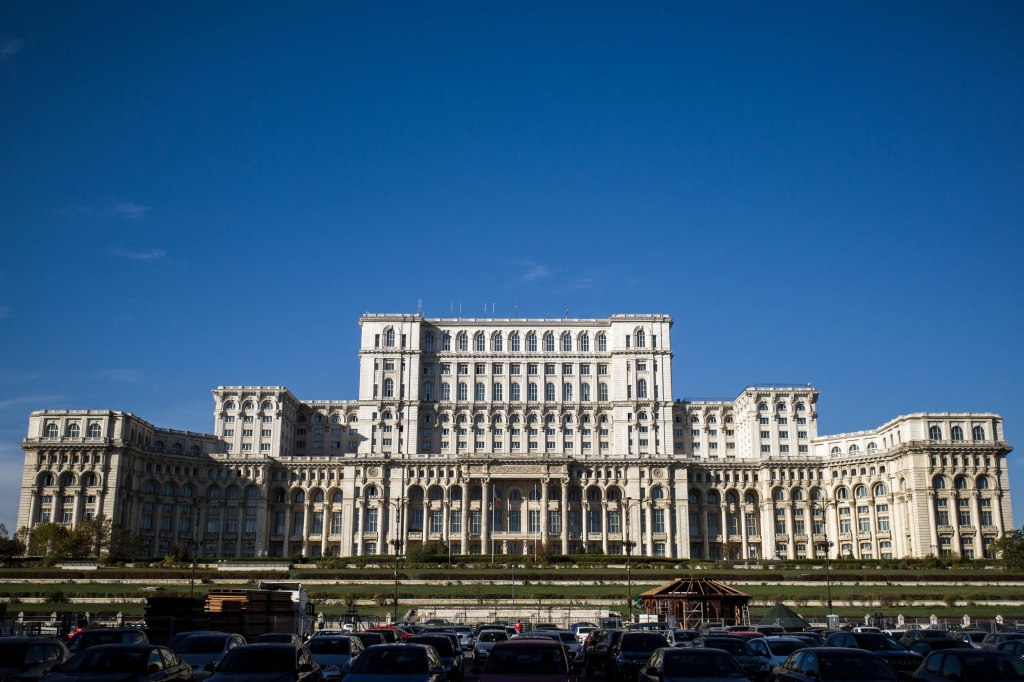
Hello from Bucharest! or is it Budapest… Where am I? Oh well, the journey is more important than the destination they say, and my journey here was quite interesting, although the destination, Bucharest, is rather nice as well.
A bus from Chisinau takes 7-8 hours, the train takes 13. I took the train. It is also more expensive than the bus, but I was travelling first class. That’s correct, I booked a ticket for a first class berth on the overnight train from Chisinau to Bucharest, it was only $7 more than second class anyhow. Luckily I had read up on the journey beforehand, or I may have been somewhat shocked with what I discovered. The train has been described as a rolling Soviet museum, it appears relatively unchanged since the 50s or 60s. First class is not comfort class, but it was an experience. My cabin had two seats/beds. Nobody joined me on the journey. The train was a quarter full at most. The conductor is a gruff Moldovan man who speaks Russian.
Why does the train take so much longer than the bus? Well partly it’s because the train is very slow. Mostly it’s because they have to lift the train up. Train tracks in the former Soviet Union are a different size than those in the rest of Europe. This means that at the border with Romania they have to lift each carriage individually and change its wheels to fit the tracks. This, along with the border crossing, took about two hours, starting at about 7pm. If you take the train in the opposite direction you get woken up by immigration and customs at 3am.
The Moldovan customs officer poked through my bag and checked every possible storage spot in the cabin. Her Romanian counterpart said hi, asked if I had cigarettes or alcohol, and wished me a good journey. A middle aged Moldovan lady came by to ask if I was feeling well. I was.
While all this was going on the carriages were jacked up, and the new wheels installed. I watched the process happening to another carriage out of my window. I didn’t even feel when my own carriage was lifted or lowered. The experience was not all it was chalked up to be.
After that it was smooth sailing all the way to Bucharest. And when I say ‘smooth’ I mean ‘not smooth’. The train bumped along all through the night, and while my little bed was comfy enough, I’ve had better sleeps. That morning at 6am there was a knock on my door letting me know we were about to arrive, and just like that I was in Bucharest.
Many of the old buildings here were destroyed by Nicolae Ceaușescu, the Communist leader of Romania from ’65 to ’89, to make way for his massive building projects. One man saved over twenty buildings and churches by lifting them, installing train tracks underneath, and rolling them out of the way. This includes one apartment building which he moved with the residents still inside. There are still some nice buildings, especially ones from the turn of the century when French style was all the rage. The biggest attraction here is the biggest, literally.
The Palace of the Parliament is the second largest administrative building in the world, after The Pentagon. It is also the heaviest building in the world, on account of all the marble, and carpets, and 16m high velvet curtains. Construction was started in 1983. Many of the best architects from Romania and worldwide submitted designs. Ceaușescu chose the design of a 27 year old straight out of school because hers was the largest, no other considerations. It was meant to take two years. When communism fell and Ceaușescu was executed in 1989 it was not complete. Since they had all the building materials ready to go they continued the project, finishing in 1996. There are over one thousand rooms inside. It currently houses the Romanian parliament, many government offices, a contemporary art museum, some restaurants, and other things. Less than 400 of the rooms are in use. You can rent them for conferences and other events.
As stupid as the building is, almost all of the building materials came from Romania, which is nice. There is marble everywhere, and expensive wood. The hundreds of chandeliers are made of crystal. If they turned on all the lights at once it would cause a power outage in Bucharest. The carpets are so large that they were made in pieces and stitched together once they were inside. I took a tour. We walked two kilometres (not in a straight line), and up 300 stairs, and saw only 5% of the building. I still struggle to grasp just how large it is. It is as big under the ground as above it, with a nuclear bunker at the bottom.
Ceaușescu wanted a massive balcony on the front so that he could give speeches to massive crowds of people. He died before the balcony was completed. The first person to speak from the balcony was Michael Jackson. He said, “It’s really good to be here in Budapest“. Many other international musicians have made this mistake. The second time Iron Maiden played Bucharest the road from the airport was lined with billboards saying, “You are in Bucharest, not Budapest”. Some tourists book a ticket to the wrong city. I was here on purpose.
I also visited Ceaușescu’s house. This was his private residence for him, his wife, and his three children. It was not as large as I expected, but I think that if I had not just been in the massive Palace of the Parliament I would have been more impressed. It was a pretty darn nice house.
I saw some other things in Bucharest, but these stood out.
- Veliko Tarnovo, Bulgaria
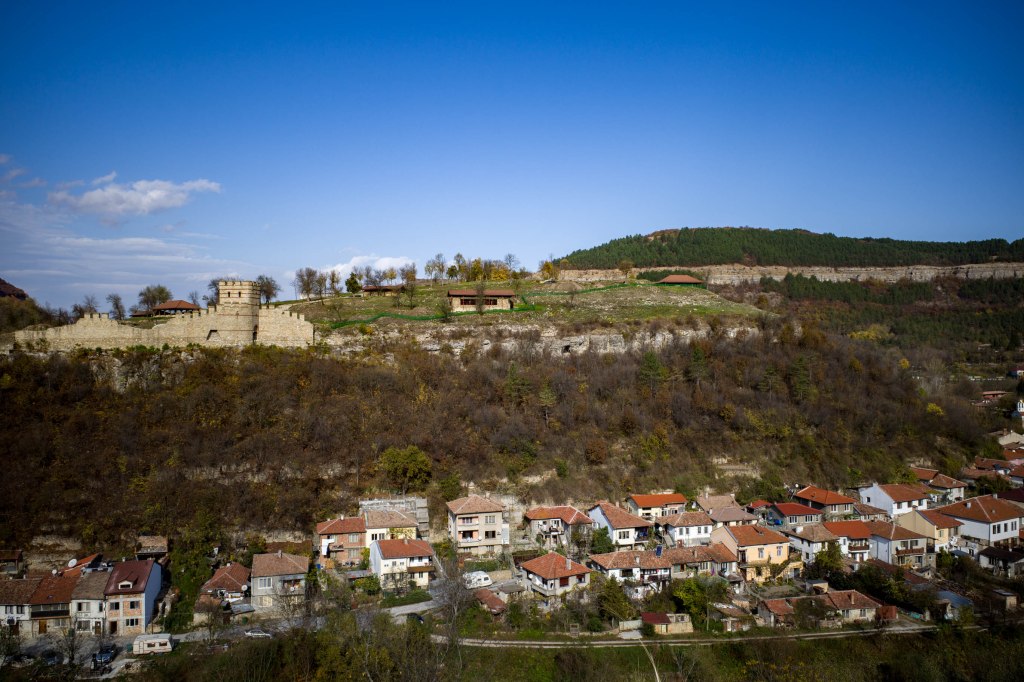
I’m super happy to be in Bulgaria. It’s such a nice change from everywhere else I’ve been for the last two months. I’ve enjoyed every country so far, but the differences between countries has been subtle. If I were to go straight from Estonia to Romania I would of course notice big differences, but since I’ve made my way south more slowly, each country has been only a slight change from the one before it. This makes Bulgaria refreshing, as for the first time I feel that I’m somewhere different from where I’ve been before.
I guess it feels like I’m finally in the south of Europe. The weather’s been warm since I got to Poland, but it’s even warmer here. The landscape is starting to feel Mediterranean, the architecture as well. It’s nice.
Admittedly I am in a beautiful old town in Bulgaria. I’ve yet to visit a big city, so opinions may evolve. I had to change buses in the city of Ruse right after crossing the border from Romania, and it was an uninspiring place. A couple of hours later, however, I was in Veliko Tarnovo, gazing up at the massive ruins of the Tsarevets Fortress, illuminated with the warm light of spotlights.
Veliko Tarnovo was the capital of Bulgaria during the middle ages, and it has a suitably large fortress to go with the title. Even in ruins Tsarevets is an imposing sight, covering a hilltop near the old town, with a causeway leading up to it. It’s a beautiful sight. The church in the very centre of Tsarevets has been well preserved and has very unique, modern murals inside.
I spent most of a day here just sitting in the sun reading. I’ve been travelling all this time, but now I feel like I’m on vacation.
I don’t really know what else to say. It’s lovely here, but words are failing me at the moment.
Today marks 2 months, or 60 days of travel. Time hast flew-eth.
My next stop is the oldest city in Europe.
- Plovdiv, Bulgaria
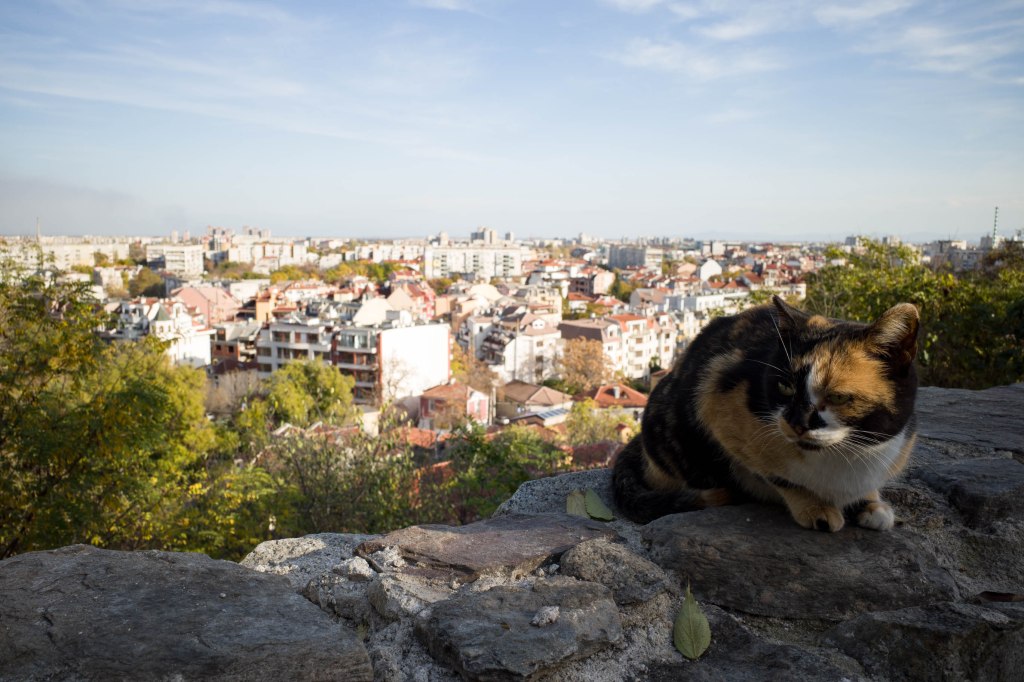
I am loving Bulgaria. I think I already mentioned that. Even though I encountered my first (minor) setback of my trip so far.
My trip has been going super smoothly, everything working as planned, always getting where I want to go. So it was about time something went wrong. It was really such a small problem that it hardly bears mentioning.
There I was in Veliko Tarnovo, all ready to catch a bus to my next destination of Plovdiv. I arrived 45 minutes early to the bus station (the bus stations in Bulgaria are in annoyingly non-central locations), and went to buy my ticket.
“It’s finished”, the ticket salesman tells me. For some reason ‘finished’ seems to be the English word used throughout Eastern Europe for ‘sold out’, or ‘closed’. So all the tickets to Plovdiv were sold out for the day. I guess Veliko was a popular weekend getaway for Bulgarians and they were all heading back home.
After sitting dejectedly for a few minutes, I booked a ticket for the next morning, and headed back to the hostel for another night. If I could have been stuck anywhere for an extra little while, beautiful Veliko Tarnovo was a good option.
The bus to Plovdiv takes four and a half hours. One full hour of that time is the bus sitting around at a rest stop in the mountains and a bus station in another city. It was also the first bus driver I’ve encountered who seems to follow the speed limit. Bus drivers throughout my trip so far have been all about efficiency, speeding down the road, passing at every opportunity. This bus driver was positively slow. We were on some winding mountain roads, to be fair, but even so I expected a bit more verve from the driver. The drive was beautiful at least.
One unnecessarily slow bus ride out of the way and I was in Plovdiv, the European Capital of Culture this year. It’s also the oldest city in Europe, so they’ve had plenty of time to perfect their culture.
Plovdiv feels like a city of culture, and like an old city. In the old town every one of the beautiful houses contains a museum or gallery. The upper levels of the buildings jut out over the street, a tricky construction technique to get more floor space without paying for a larger plot of land. The cobblestone streets in this area are the most rugged I’ve seen yet. But the old town is hardly the oldest thing in town.
Plovdiv has been a city occupied by many cultures over the years. Thracians, Macedonians, Romans, Bulgars, and the Ottomans all put their stamp on Plovdiv before the modern Bulgarian state was formed one hundred years ago. There is a gate in the city wall that may date to the Macedonians. There are also some excellent Roman ruins here. I love medieval stuff and Communist stuff, but my journey has been lacking Roman stuff up to this point.
Plovdiv has an amphitheatre that still hosts concerts (sadly none while I was there), and seated six thousand back in it’s prime, a stadium which seated thirty thousand but is mostly buried today, and other Roman ruins. Apparently, being named Capital of Culture gave the city more incentive to excavate and display some of these ruins, with some being made open to the public only months ago.
Seeking to become the Capital of Culture also caused the city to clean up an area in the city centre that was basically streets full of parked cars seven years ago. Today the area is full of cool cafes, restaurants, and bars, as well as beautiful street art.
There is also one of the longest pedestrian streets in the world, and it wouldn’t feel out of place in Western Europe.
Also there are tonnes of cats here, and though they are stray, they’re getting fed and they’re healthy and friendly.
Bulgaria is my favourite country so far. I’m going to spend a little while longer here before heading into the rest of the Balkans and the former Yugoslavia.
- Sofia, Bulgaria
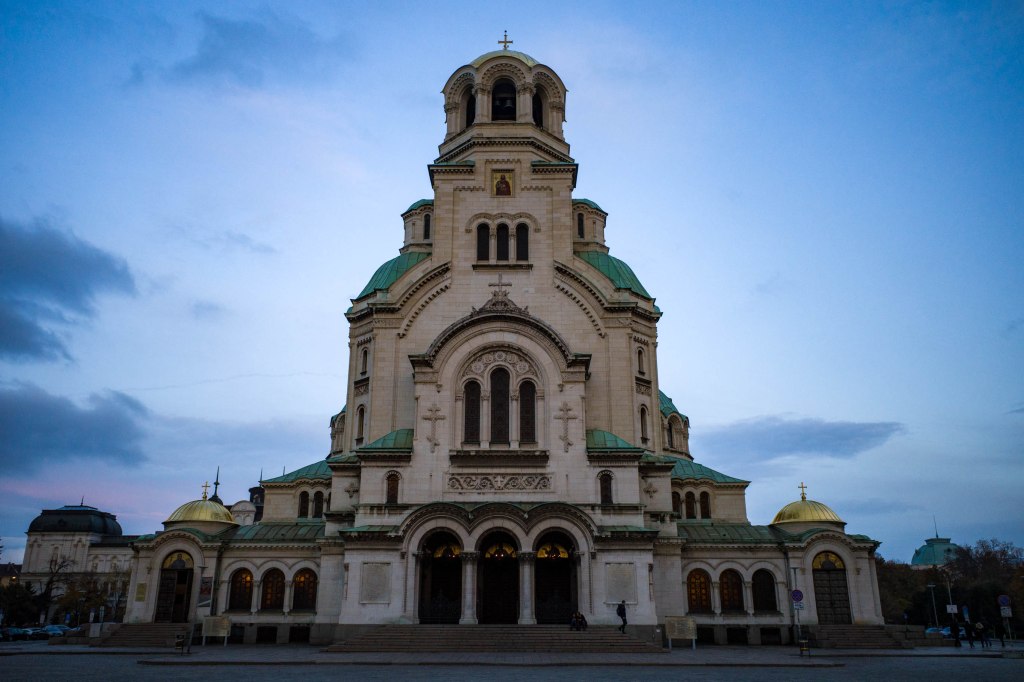
Sofia doesn’t make the best first impression. It’s a big, dirty city, and after the other beautiful places I’ve seen in Bulgaria it looked pretty grim in comparison. At first.
Just like Plovdiv, Sofia has a long history. You’ll find Roman ruins, medieval churches, and Communist apartment blocks all jostling for room here. The apartment blocks win.
Nonetheless there are some very beautiful parts to the city. The Orthodox churches are beautiful, and in the centre there is an Orthodox church, a Catholic church, a mosque, and a synagogue all within sight of each other.
Speaking of the synagogue, which has a beautiful interior, all of Bulgaria’s Jews survived the Holocaust. Although Bulgaria allied itself with the Axis, when Hitler asked in secret that they deport the Jews, it didn’t remain a secret. People took to the streets in protest, with Christians wearing Star of David armbands in solidarity. The government couldn’t really stand up to Nazi Germany’s power, so instead they delayed and deflected. They said that the Jews were busy doing labour and they would be sent once they were done. Eventually they delayed long enough and the war ended.
I visited a very interesting museum called ‘The Red Flat’. Museum doesn’t really describe what it is, which is a fully preserved communist era apartment. You enter with an audio guide and can walk around or relax while you hear stories about everyday life and the people who owned the apartment during communist times. You’re free to touch everything in the apartment, so you can flip through books, put on records, and fiddle with various vintage varietals. It was a pretty cool experience.
Sofia was a perfectly lovely city in the end, and it speaks to the quality of Bulgaria that it is my least favourite place in the country.
Bulgaria has really been my favourite country so far, and I’m sad to leave. But I’ve been here longer than any other country so far, and any of the upcoming countries could overtake the top spot, so I will continue on.
- Skopje, (North) Macedonia
North Macedonia, the Republic formerly known as The Former Yugoslav Republic of Macedonia.
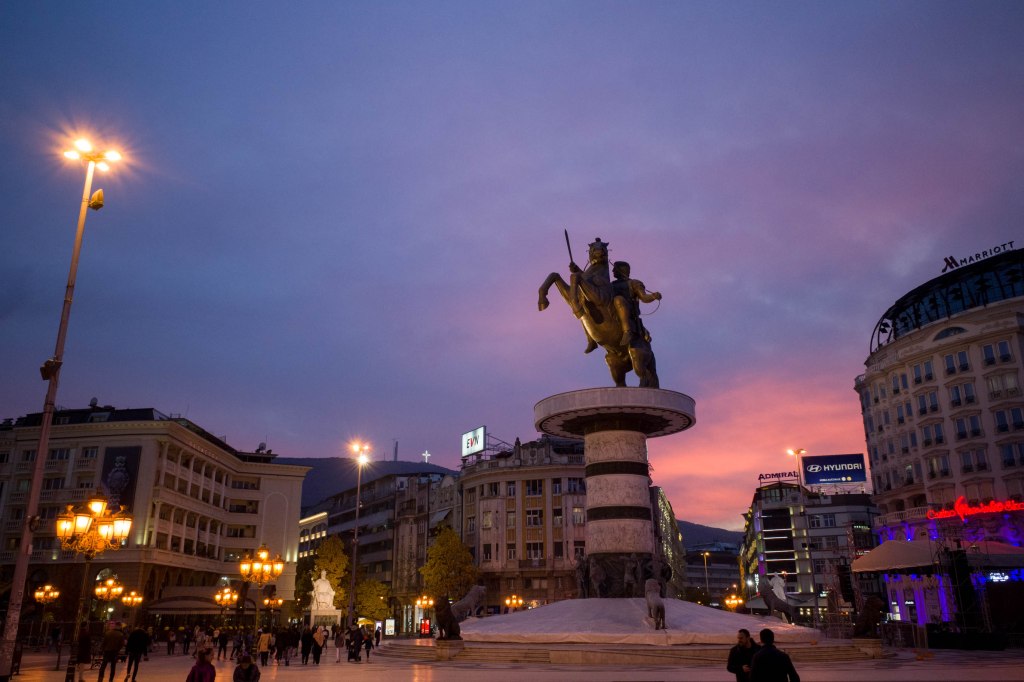
Skopje is the weirdest city I’ve ever visited. It may be the city with the most statues, it certainly feels like it. Highest density of statues at the very least.
When I arrived at night by bus I was greeted by a vision of a neon cross hovering high above the city.
“Is this it?”, I thought, “Is God finally revealing itself to me, proving my atheism to be a foolish mistake?”
In a word, no. The neon cross was a very man made item. It was the Millennium Cross, built to celebrate two millennia of Christianity, seated atop a mountain overlooking Skopje. It is the second largest cross in the world, the largest metal one.
As you walk along the river towards the centre of the city you will see many beautiful Baroque and classical style buildings. You will see uncountable statues of important Macedonians. You will see at least twice as many bridges as necessary.
Don’t be fooled. These beautiful old buildings and statues were mostly built between 2010 and 2014. They are built in styles that never existed in this area historically. When buildings like these were being built in other parts of Europe, Macedonia was part of the Ottoman Empire.
Skopje has been nearly completely destroyed three times by earthquakes in the last 1500 years, most recently in 1963. This is why there are very few real historical buildings in the city. The country and the city have also been very corrupt, which is why unthinkable amounts of money has been spent on statues and pretty buildings.
How does Dylan know all this? you wonder. Well, let me tell you. I’ve often been going on free walking tours of cities. It’s a good way to learn about the city, and figure out what you want to look more closely at during the rest of your time. These tours are generally pretty good. The one in Skopje is the best yet.
It didn’t hurt that only three of us turned up for the tour. This made for a more intimate, personal tour than you usually get. We were outnumbered by the stray dogs that followed us along our way. They had tags indicating that they had received shots and been fixed, so they were very friendly and not aggressive. Unless you’re on a bicycle, that is. As we walked the streets of Skopje our posse of dogs kept us very safe from cyclists, barking and biting at ankles, as well as chasing any car that dared to drive by.
So we had pets and protection, good start. We also had an excellent tour guide. Mihal was the friendliest, most welcoming guide one could hope for. Our tour went much longer than usual because we were talking for so long. Mihal brought us to a restaurant and treated us to rakia, Balkan alcohol made from plums, grapes, or other fruit. He said we’d take a 20 minute break there. We ended up staying for an hour and twenty minutes. Of course stopping there is just part of his standard tour, but getting an in-depth, fairly unbiased, explanation of the issues around the name Macedonia, was a bonus.
Also as part of the tour we got a coupon for free rakia, and one for free beer. Although the value of such things was $3 max. But I drank well that day.
Anyhow, back to the statues. There’s a massive equestrian statue of Alexander the Great, but it’s officially called “Man on Horse” or something, so as not to bother the Greeks who think they own Alexander and the name Macedonia. There is a fountain with four statues of Alexander’s mother in it. There is a statue of his father. There are two bridges with about 30 statues on each of them. There are countless other statues. There is a triumphal arch, even though Macedonia has had no military triumphs in the last 2000 years.
Even knowing none of the story behind how silly all these things are, it still feels pretty absurd. When I first walked into the centre I was thinking “what the heck”, at every turn.
There are a handful of actual historical buildings still remaining in the city. One famous bridge, the large fortress, and many buildings and streets in the Old Bazaar area.
The Old Bazaar is windy cobblestone streets with shops and restaurants crammed into every available space. Apparently restaurants don’t have to pay taxes in the bazaar if they keep their building in its original condition, so prices are very cheap. It’s the perfect place to sit outside sipping a glass of Turkish tea or rakia, as the mood takes you, and watching the bustle of people.
Some fun facts about Skopje. Mother Teresa was born here. After the 1963 earthquake, because Yugoslavia had relations with both the USSR and America, relief was sent from both countries to Skopje. As a result, American and Soviet soldiers shook hands for the first time since the Cold War began.
All of the city’s buses were destroyed when their garage collapsed in the earthquake. So London sent some of its double-decker buses to help out until Skopje replaced their fleet. Now, in the last few years, Skopje’s newest buses are double-decker and built in a retro style to look somewhat like London’s buses of the 60s.
I highly recommend Skopje. You’ll never see another city like it.
- Prizren, Kosovo
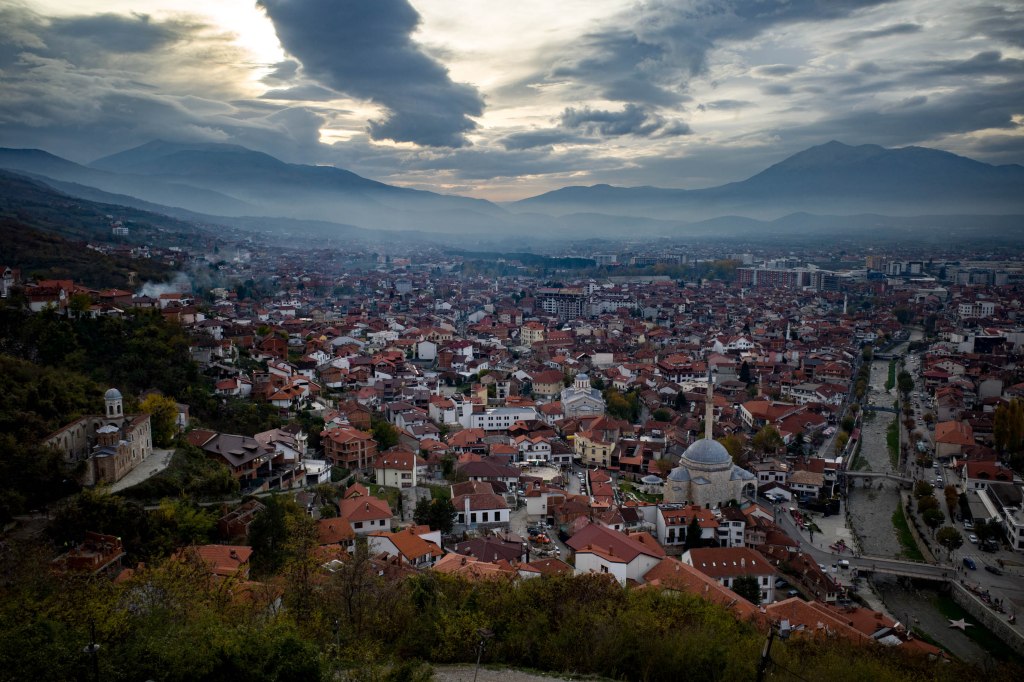
The central square of Prizren is surrounded by cafes and restaurants, their patios full of locals drinking tea or coffee and chatting away. I took their example and spent a good deal of time sipping tea at a lovely cafe in the garden behind the Sinan Pasha Mosque.
Minarets dot the horizon. Throughout the day the call to prayer sounds out. There are always several mosques within earshot and they never quite seem to be in sync, so a multitude of voices create a beautiful cacophony.
The narrow streets barely have sidewalks, so one must keep their wits about them and always be prepared to step out of the way of a car. Kosovans have been very friendly and helpful, but once they are behind the wheel of a car it feels as if they will run you down with barely a second thought. Welcome to the Balkans.
Yet another fortress sits above the city. It’s accessible via the steep, winding streets, or you can walk out of town along the river, and through the forest to approach the castle from the back. From above Prizren is a sea of red tile rooftops, pierced by the aforementioned minarets, flowing up to the mountains in the distance.
- Shkodër, Albania
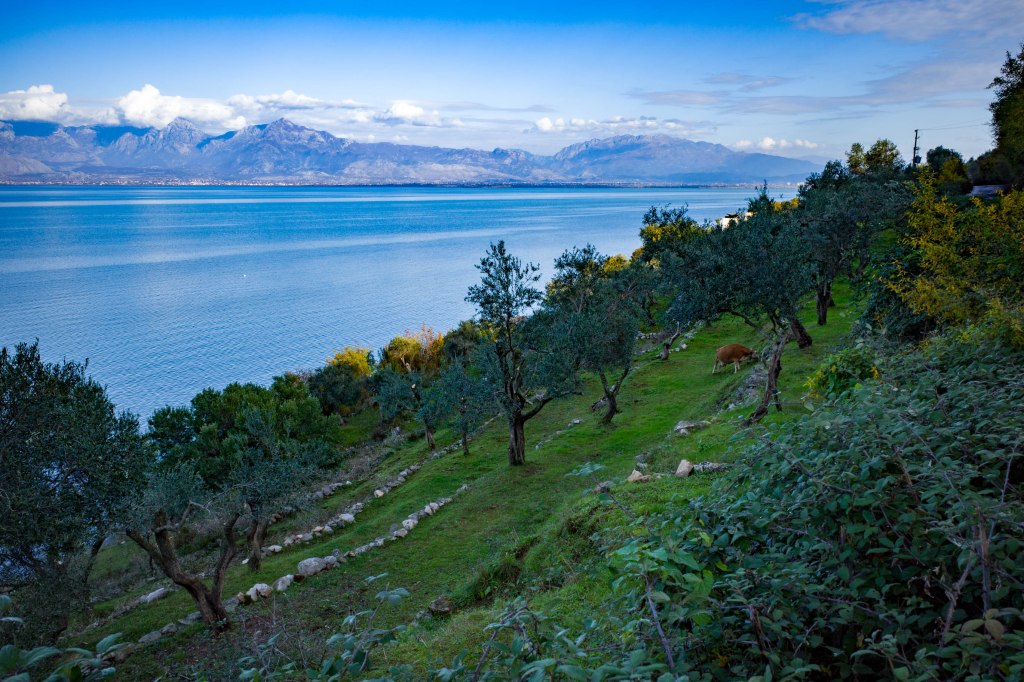
The drive into Albania was beautiful, until it wasn’t. For the first couple hours the road wound through breathtaking mountains with picturesque villages in the distance. Then we got to the lowlands and it was impossible to tell where one town ended and the next began. For over an hour we drove through outskirts. Crappy looking roadside hotels and building supply stores. Then the bus dropped me off on the outskirts of Shkodër, this bus just skipped by the city without going to the center. So I walked for almost an hour down the main road to the center of town. It was not an inspiring start.
Actually, it was quite interesting. But I was tired and had not been expecting such a walk. Also it was chaotic and kinda dirty. The road was two lanes in each direction plus curb parking, but people stop their cars in the lane next to the parking lane. There are as many bicycles as cars and it’s a bit of a free for all. People sit on the sidewalk with little displays of goods for sale. Fruits and vegetables, shoes, odds and ends. Chickens are tied by their legs to the handlebars of some bikes. Live chickens.
And then I made it to the center of town, and just one street over from the craziness is a whole other world. An elegant pedestrian street. Peaceful narrow lanes. My hostel.
Shkodër features two of the best museums I’ve seen in a while. The Museum of Memory was yet another museum dedicated to the atrocities of the communist regimes, set in yet another old prison. This one was distinguished by having an exhibit chronicling every single totalitarian regime in Europe – Nazis, fascists, communists, on a country by country basis. This was interesting, but soon became overwhelming, and the numbers blended together and became unreal. Simple statistics are not a good way to communicate the numbers of people murdered and deported. The other museum was much happier. It was an exhibition of photos taken by a family of influential Albanian photographers from the beginning of photography up to the 1970s. The photographs were excellent and portrayed both the history of Albania and of photography.
A big draw of Shkodër, other than hiking the nearby mountains, is Lake Shkodër. So I just had to get out of town and enjoy the lovely lakeshore. Luckily, my hostel had bikes to rent. That’s how I found myself biking out of town, on the road I had all too recently considered chaotic. Now I was part of the chaos. Cycling alongside and inside of traffic. Dodging Albanian drivers like the best of them. Actually, once you’re out there, it’s not as wild as it appears. People drive very slowly in town, and they’re used to cyclists. An employee at my hostel figures that Shkodër has the 7th most bikes in Europe per capita, which makes sense. It’s flat and perfect for biking.
Then I was out of town and biking along the shore of Lake Shkodër. On my left, mountains. On my right, lake, and then mountains. In front of me, a narrow winding road.
After a leisurely hour and a half of biking the road runs out. Not much further and you’d cross the border into Montenegro.
Like any city worth its salt, Shkodër has a fortress. Situated on a hill just outside of town, it offers an excellent view of the city and surrounding countryside.
Albania is the least familiar place in Europe. It’s the furthest from Canada or the rest of Europe that you can get. Spending longer here and seeing more of the country would be quite an interesting experience. But my time in Europe is running out, and I want to hit a few more countries before I have to call it quits. So it’s so long to Albania and zdravo to Montenegro!
- Kotor, Montenegro
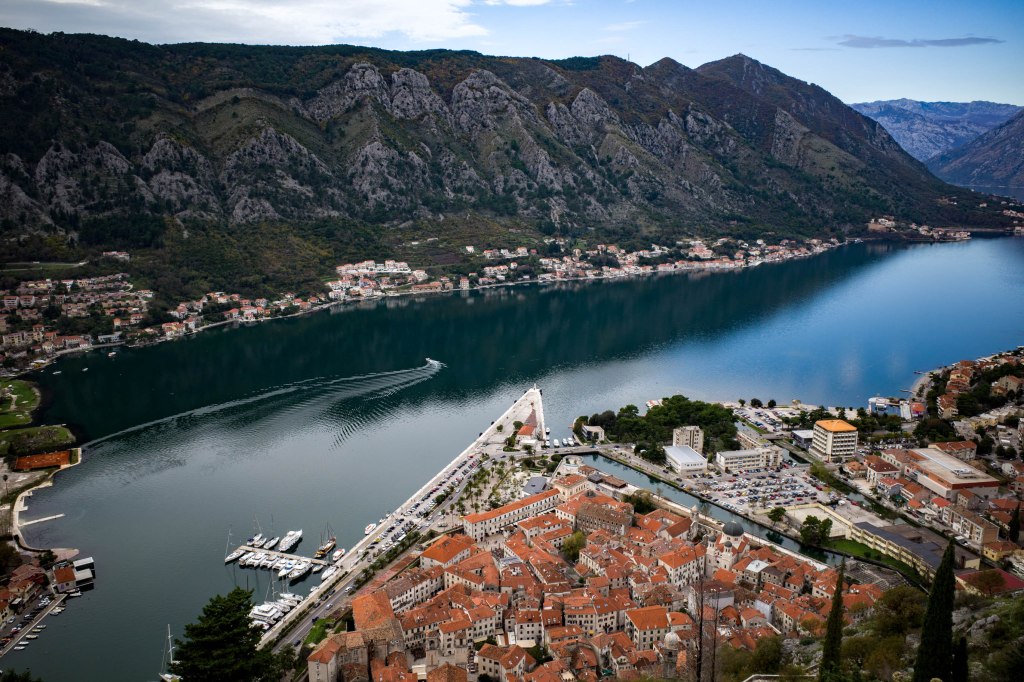
Imagine a place where high, rugged mountains plunge straight into the sea. But no, this is not the icy waters of the North Sea, nor is it the Norwegian fjords. This is the Montenegrin mountains, and this is the Adriatic Sea. Well, it’s the Bay of Kotor. Actually, the town of Kotor is on a smaller bay off of the Bay of Kotor, so it’s a couple of steps removed from the sea. The point is this: mountains + sea = nice.
Kotor is beautiful, and it knows it. I’m into the part of the Balkans that normal tourists visit, not just backpackers. Cruise ships dock here. Kotor is primarily a tiny old town nestled safely between a wall and a mountain. Despite its small size, there is lots to see, as the streets are so narrow and winding that there’s always something new around the corner. You also have easy access to all the other towns and sights around the Bay of Kotor, though I didn’t take the time to venture far.
It was dark when I arrived in town. Just before you enter Kotor from the south, the road goes through a tunnel. As my bus emerged from the tunnel, fireworks exploded overhead. They knew I was coming. Then I caught sight of the fortress, illuminated high above the town, and the fireworks suddenly seemed quite lame in comparison.
The fortress perches on the mountain above Kotor. I’ve seen many a castle/fortress at this point, but usually they are on hilltops, not mountaintops, albeit a small mountain. Walls zig and zag their way up the mountain from the town below, as does a staircase. But it costs 8€ to climb the staircase to the fortress, who’s got that kind of money?
Fear not, budget traveller, there is a way. Behind the fortress lies a long path full of switchbacks. If you follow it all the way, you’ll cross the mountain into a national park. If you stop when you get to the fortress, you may notice a ladder leading to a window in the wall. I’m not saying that this is how I got in to the fortress, but I do have 8€ in my pocket right now.
The fortress is pretty nice. It has great views, and nice enough walls and what not. I don’t know what they’re doing with the entrance fees, but it certainly isn’t cleaning up the garbage or installing a couple of trash cans. Seeing the lack of upkeep made me glad that I “allegedly” snuck in the back. Terrific views though.
So there you have it. Kotor is beautiful, and there’s a lot more to do in the area, but during the summer it must be swarming with tourists, so visit in November, when it’s still warm, but not so many people are here.
- Sarajevo, Bosnia & Herzegovina
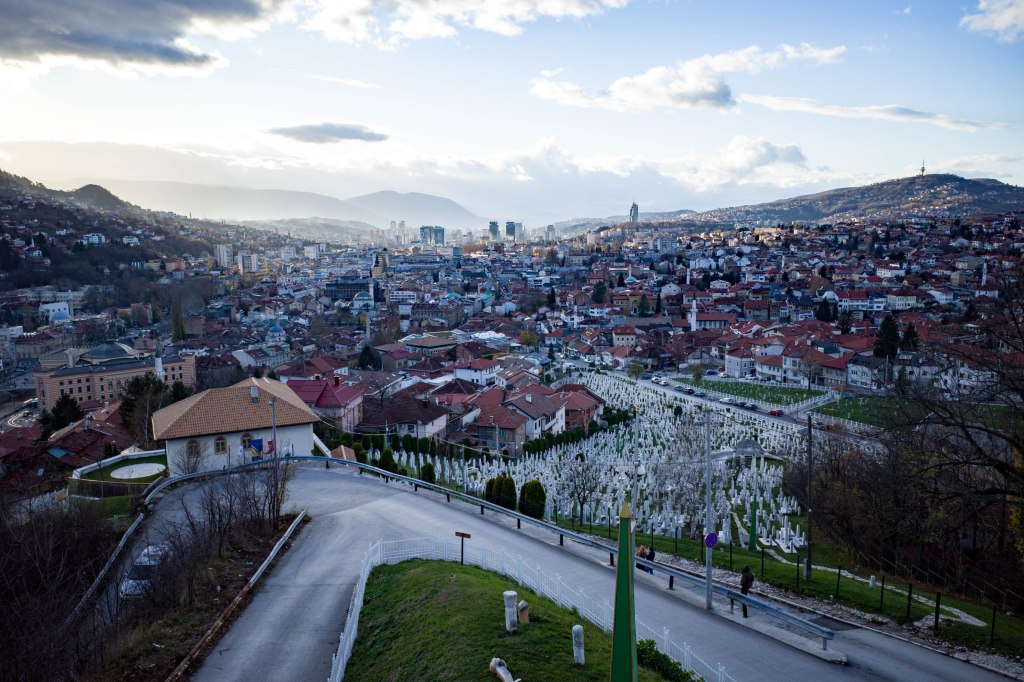
In Sarajevo there is a distinct line where East meets West. On one side is the Ottoman market district, dating back 500 years to the founding of the city, full of domed roofs, mosques, and narrow streets. On the other is the Austro-Hungarian area, only 100-150 years old. Here buildings have ornate sculpted facades and would not look out of place in Austria, or Hungary for that matter. This is just in the old town. There are also drab concrete apartment blocks that, like many buildings in the city, are pocked with shrapnel damage from the siege. I also saw some skyscrapers for the first time in awhile.
Suffice to say, this is an interesting city with a turbulent history. An important Ottoman trading city for centuries, then the site of the spark that ignited The First World War when Archduke Franz Ferdinand was assassinated near the beautiful Latin Bridge. In 1988 Sarajevo hosted the Winter Olympics and only 8 years later the longest siege in modern history occurred here.
The Bosnian war and the Siege of Sarajevo occupied most of my interest while I was in the city. It’s hard not to think about it when you’re here, there are reminders of it everywhere. The aforementioned shrapnel scars are still visible on buildings throughout the city, they simply can’t afford to repair every building. Then there are the Sarajevo Roses. If you look down while you walk you will notice these splashes of red on many streets. The red is resin that has been poured into the scars of mortar shells which caused fatalities during the siege. There are hundreds in the city.
The Museum of Crimes Against Humanity and Genocide gives an uncompromising look at the horrors of the Bosnian War and the Siege of Sarajevo. Since these events happened only 25 years ago, there is plenty of video footage and photography documenting the war. This made for the most difficult museum experience I’ve had yet. The atrocities were not just words or numbers, they are there for you to see. I’m not going to tell you about them. If you were alive in the 90s you likely already have some idea. What stuck out to me however was how resilient the people of Sarajevo were. They were living in horrible, traumatizing conditions for almost four years, but life went on. Children attended school, people went to work. People went to the theatre. There was a film festival, beauty pageants, and fashion shows. The people of Sarajevo kept going, and survived for almost four years a siege that was meant to break them completely and utterly. It’s quite inspiring.
I’m sorry if this post has been a bit dark and depressing. Sometimes that’s how life is. Be glad that you grew up safe and sound and that you are only reading about these things. And if you have lived through some tragedy, even if it’s ‘minor’, I salute your strength and bravery.
Okay, enough of this. What happened to sarcastic, ironic, irreverent Dylan? I’ll leave you with this. The Bosnian war was conflicts between three ethnic groups: Bosniaks, Serbs, and Croats. They all speak the same language, are all Slavic peoples, all lived together in Yugoslavia. What is the difference between these peoples? What determines their ethnicity?
It’s religion.
- Salzburg, Austria
The hiiiills are alive with the sound of . . . K̷̗͎͍̀̈́̑̀̏̅̈́͗̏̅̐ṙ̸͎͓̗̝̺̯̘͙̇͆͑͛̂͘̕̕͘͜͝á̶̧̫̠͖͙̋̎̒̾̓͒m̶͚̺͉̯̹͆̇̃̐́̒͋̈͒͑̎͆͝p̴̺̠̜͍̗̦̣̗̰̲͂̐̕ư̷̝̰̲͕̲͍̩͕͕̪͚̯̺̪̇̊́ͅs̶͇̥̖̞̼̪̥͕̪͙̼̤͍̭͍̔̋
Hmm… That’s not quite right. Let’s try again.
Do, a deer, a female deer
Ķ̸̥̠̙͚̐̒̿͒̀̇͆̓͠r͙̝̣̜͓̪̩̍͒̆̇̊a̷̳͈̤̙͍̤̿͆̾͜͝͠͞ṃ̢̧͉̜̘͋͐̓̃͞p̼̳͓̙̻̲̺̯̠̍̋͛̏͊̍͗͛͑ͅu̷̡̺̻̝̯̤̅̈́͌̆̋͜͜s̼͍̙̪̖͇̾̈́̔̅͊̏̍͊͑͠,̷̛̲͉͎̱̯͚̼̹̻̀̉̐̓͡ ả̶̡̙̝̩̱̜̼̐́̍̅̚̚ d͉̦̺͂̿̂̓͋͗͜͢ȩ̵̲͈̖̗̀͋̓̔̀͒̓̔̌m̡̛̛͈͈̮̥̹̔̂͊̃ǒ̶̟͉̝͙͖̠̠̳͂͂̒͘͟͢n̠̱͇͍̼͋̆́̾̇͋͘̚̕͞,̵̡͙͉̳̠͚̞͌̔̈̍͘̚͟͝ ȁ̰͎̪̩̤̆̐̀̑̏͠͡͞ Ĉ̴̛͍̭̟̳͕̟̥̺̈́̅̾̑͛̀͒͜ͅḩ̝̠̦̩̙̇̓̒̅̋̀͗̈͢r̨͇̗̳͍̲̤͔̥͍͆̈́͆́́̀i̥̣̹̬̫̿̃͊̄̎͢s̻̠̘͍̗͇̆̿̒̍̀̈̅̇̕̚t̡͈̣̼̙̩̩̣̘͋̓͋͌̎m̢̮͇̩̖̞̑́̃͂̇͒̀̽͟͟ͅa̵̢̛̲͉̟̍̎̍͘͢s̞̮̮̟͔̱̱͑͐͌͌͋͢͢͡ d̨͈͎͈̖͖͍͓͚͌́̆̾̑̊̐̿͜ȇ̖͙̗̮̥̱͉͎̒̑̌̊̈́m̛͍̜̭͍̼̈̆͗͂́̍͜͢ợ̶͕̫̗̼͓͈̞̯̽͂̍͌̓͑ņ̹͖̗͑̐͒̃̅̒̃̿̾͆͢
Yikes!
Salzburg is known for being the location where The Sound of Music was filmed. They also have a weird obsession with some guy called Mozart. I visited for neither of those reasons, although I did watch The Sound of Music at my hostel, since they play it EVERY NIGHT.
No no, I was not in Salzburg for music nor musicals, unless you count the clanging of bells and the screams of naughty children as music, which I suppose I do.
It’s a good thing that I was visiting Salzburg for an interesting seasonal event, cause it’s kinda boring here. It’s a beautiful city, and there’s plenty of history and things of interest. But after everywhere else I’ve visited recently, Salzburg lacks character. It’s too pleasant. There’s no grit or grime. Sorry Salzburg.
I still had a nice time here, short though it was. I walked up a couple hills, saw some buildings, relaxed. Winter is a nice time to visit as there are several Christmas markets in town, where you can buy Christmas-y things and, most importantly, mulled wine to keep you warm. It’s just a shame there was no snow to accentuate the holiday mood.
But no, I was not in Salzburg for the Christmas markets, spooky as rampant consumerism may be. I was in Salzburg for Krampus.
Krampus is a traditional character throughout the Alps. He is a demon who comes in December and beats naughty children with his stick. On Krampusnacht, December 5th, hordes of people parade through the streets dressed as Krampus, wearing intricately carved wooden masks and carrying bundles of sticks with which they beat the spectators.
Parade isn’t really the right word. It’s called Krampuslauf, which means Krampus-run. It’s a little like a parade. I stood in the cold and dark along the route, awaiting the arrival of the demons. In the distance cowbells rang out dully in the night, but they were not attached to cattle, they were a warning of what was to come.
Then they appeared. Goat-like demons with horrible faces rampaged down the street, eyeing the crowd for their victims. And then they were upon us. Screams rang out in the crisp night air as the Krampuses fell upon the crowd, their bundles of sticks lashing out and cracking against us. Some stood perfectly still, staring with ominously glowing eyes before lurching forward when least expected.
Okay, so they only hit people in the legs, and not too hard for the most part, but otherwise my description is quite sound. For half an hour this went on, as I alternated between being beaten and laughing uproariously when people next to me were beaten, all while trying to get some photos. Many Krampi stopped to let people take photos with them, and they shook hands with little children, or knelt down to give them a closer look at their masks. And then it was over.
- Vienna, Austria
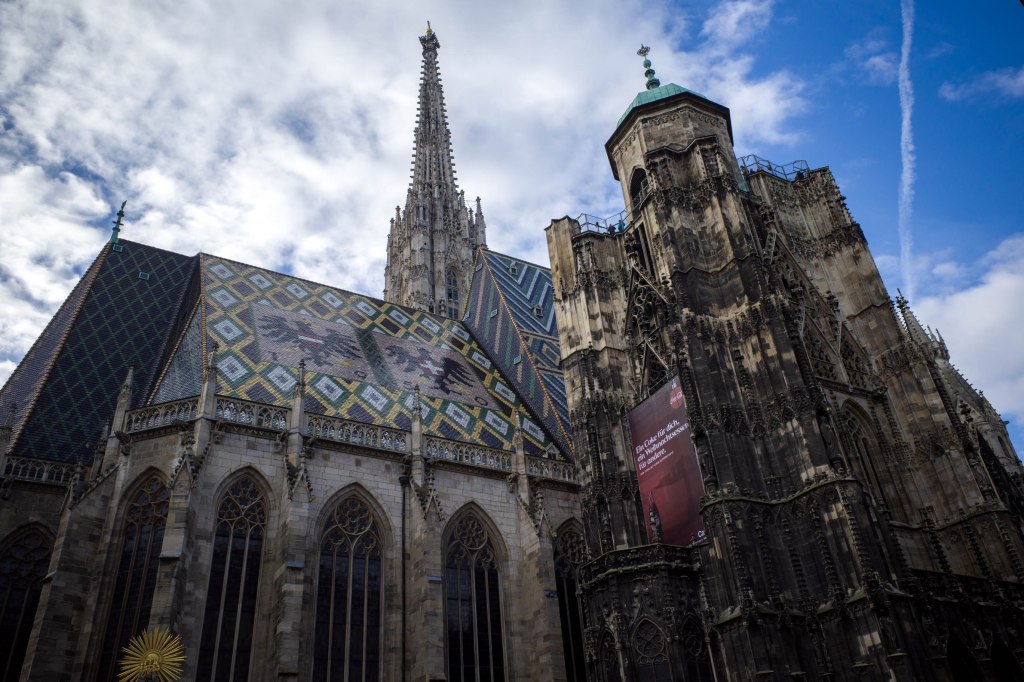
Vienna is grand. Unbelievably grand. Everywhere you look the architecture reminds you that this was once the capital of an empire. Palaces, sculpture, statues. It’s also very busy. It’s like Prague in that way. But where Prague sadly felt cheap and tacky in it’s touristy-ness, Vienna is refined and dignified. It’s also literally more expensive.
I need to return here when I have the funds to truly appreciate it. I also need more than a day and a half to appreciate it, but such is life.
Luckily, walking around the gardens of Schönbrunn Palace is free, but I just had to choose the coldest, most grey and grim day yet to do so. The gardens were nice, but I was walking fast to stay warm, and they would be nicer if the trees and hedges had leaves and the fountains were running. No matter.
While the famous National Art Museum, or whatever it’s called, would’ve been nice, it was pricey and no doubt busy on a Saturday. No problem, there are three museums that you can buy a joint ticket to for a third of the price of the big fancy one. And so I looked down upon my dominion (the whole world) at the Globe Museum, learned to communicate with all the peoples of my domain at the Esperanto Museum, and looked at old scraps of writing at the Papyrus Museum. All very interesting.
One experience in Vienna stood out above the others. Lunch. It could have been dinner, I suppose, but it was lunch. Let’s call it a meal. A meal was the thing that stood out in my time in Vienna. I picked this restaurant mostly because Google listed its price as only one dollar sign (which in Vienna is still more expensive than anywhere I’ve been since Finland). However, it turns out there was a more important reason why I went to the restaurant that day…
They were serving brains!
Yes indeed. Pig brains with egg, green onions, and parsley potatoes. I had to try it.
The brains were chopped up nice and small and mixed with scrambled eggs. You would never guess what it was to look at it. The brains were a bit grey, but basically blended in with the eggs. Their texture was gooey and viscous. It was a bit difficult to get past. The flavour was very mild. I couldn’t even say what it tasted like, mostly I could taste the eggs and green onions. All in all, a nice meal. I’m just disappointed that I don’t feel any smarter.
Well, that was Vienna. The last real stop on my travels for now. By the time you read this I’ll be on a bus all the way to London (budget airlines be damned). I’ll stay a night in London, with no time (and probably no energy) to look around, and then fly back to Canada. It’s been nice in Europe, but I’m looking forward to some peace and quiet.
- Another Post (and black & white film)
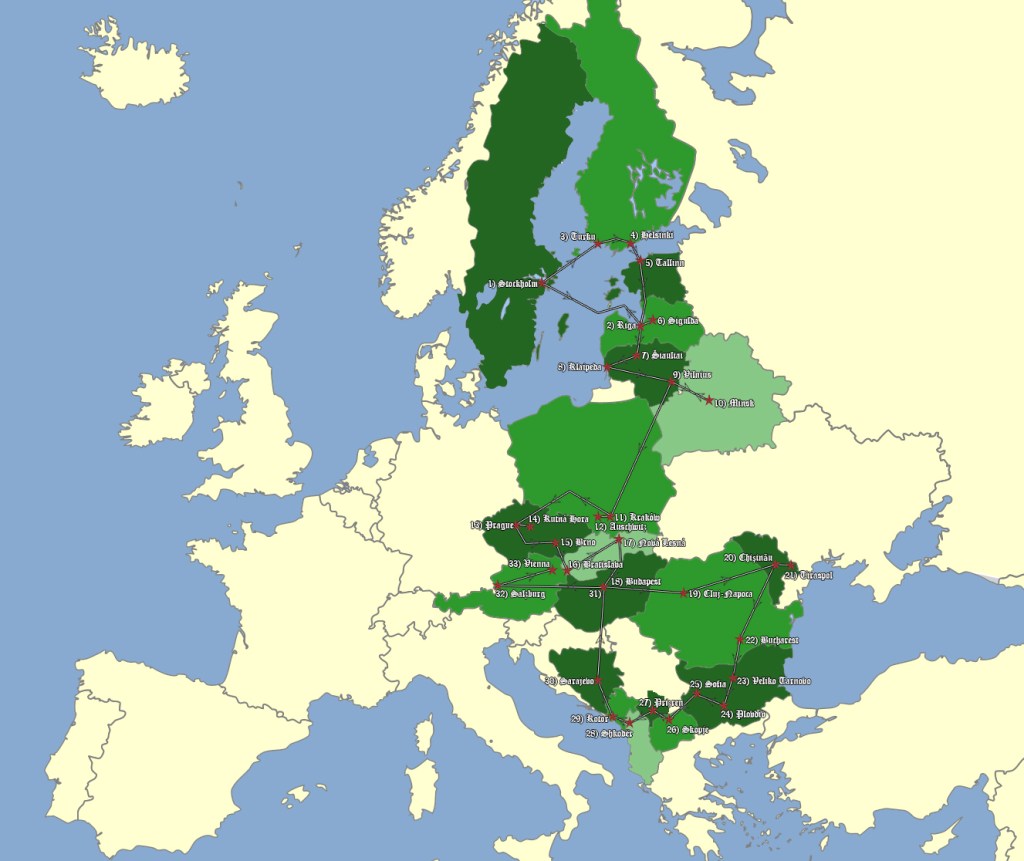
Hello there! It’s been a while since I’ve posted. It’s been a while since I arrived home to Canada. It’s been a while since I developed the black and white photos that I’m sharing here today. I think they’re pretty nice.
But first, some stats! I travelled for 90 days, or 3 months. I visited 20 countries and 31 cities/towns in that time. I would go back to any one of these places.
What next? I don’t know. Enjoy some black and white film photos in the meantime.
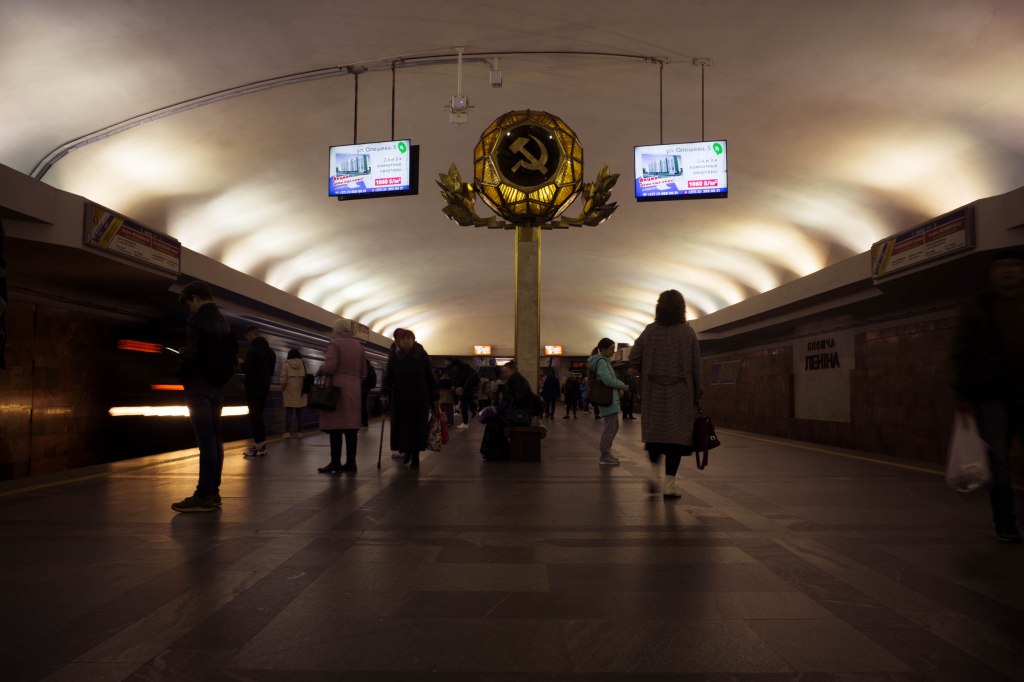
-
Subscribe
Subscribed
Already have a WordPress.com account? Log in now.
 And whither then?