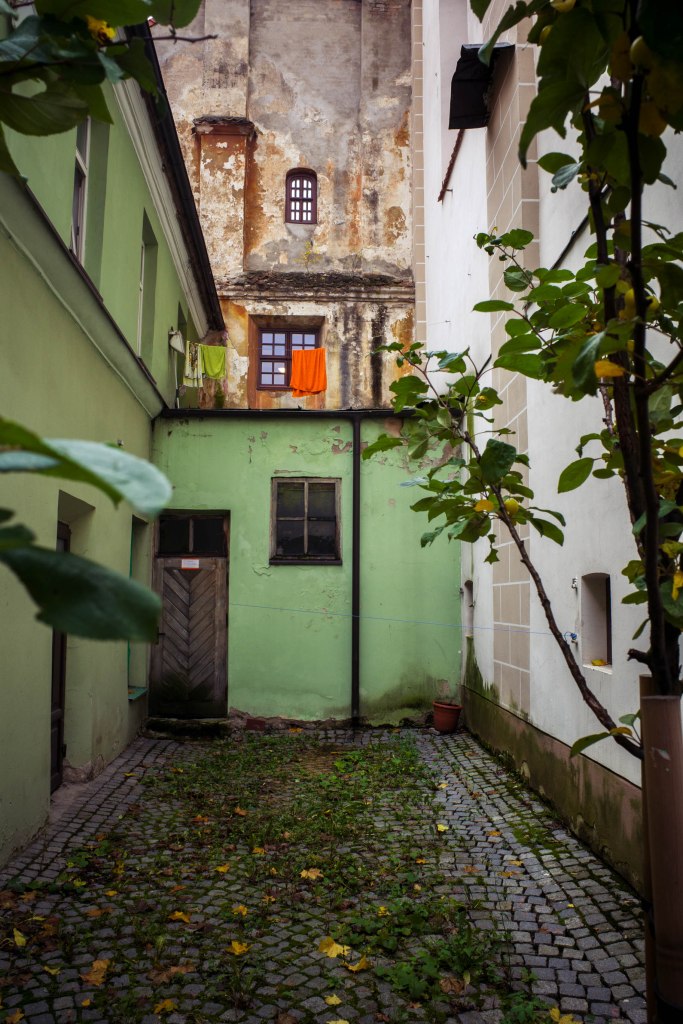
Vilnius is pretty cool. It’s the first city on my trip that begins to feel like what I imagine Prague and Budapest to feel like (I’ll be in those cities soon and no longer have to imagine). Everywhere you look there are church spires, red terracotta roof tiles stretch out before you, and everything is rather nice. Not that every city I’ve been to so far hasn’t been beautiful, they’ve just been less grand.
It makes sense that Vilnius would be nice. It was only the capital of the Grand Duchy of Lithuania, which for a time was the largest state in Europe, encompassing Lithuania and much of Poland and Belarus.
Vilnius Cathedral is the most unique church I’ve seen thus far. It’s built in a classical style and wouldn’t be too out of place in the Mediterranean. I highly recommend taking a tour of the crypts, it’s inexpensive, it’s the only way you can see them, and my tour guide was excellent.
I might not recommend the Museum of Genocide/KGB Museum. It is similar in content to the Museum of Occupation in Tallinn, but not as well presented. The content is good. Lithuania had a very active resistance to soviet rule, first armed and then peaceful; and the KGB prison in the basement is evocative (although again, Tallinn was better… sorry Vilnius), but the information was not very well presented and I found myself growing bored with what should have been interesting material.
Also like Tallinn, Vilnius has an abandoned soviet sport arena, The Palace of Concerts and Sports. It is some top notch soviet architecture, and abandonment and graffiti only makes it more evocative.
There are a lot of good, very modern feeling restaurants in Vilnius. Places with slick interior design and aesthetic menus. Also the food is good. I even went to a vegan restaurant since I’ve been eating mostly meat and potatoes and maybe not enough vegetables for the last month. And it has been one month since I arrived in Europe. Time flies.
The absolute best thing I discovered in Vilnius was a coffee shop. Crooked Nose & Coffee Stories is a micro roastery and coffee shop. The owner roasts very small batches of beans, and only brews them using manual drip methods. There’s the standard Aeropress and Chemex, but also traditional Japanese Nel drip, and a method he developed himself called Bro. Needless to say, I loved it there. The owner (whose name I should have learned) was very friendly and happy to talk about coffee, and the coffee was good. He had beans from Yemen, which I have never experienced before. They come from a British-Yemeni company that works with growers in Yemen to improve their crops and export to the world. It was a rich coffee with notes of dried blueberries, cocoa, and an earthy quality. Good stuff!
 And whither then?