Sigulda and The Gauja Valley, Latvia

I heard that Sigulda had castles, so I figured I should probably visit. Then I found a fairly unique place to stay while there, so I did visit. It took a 4.5 hour bus ride to Riga, and then over an hour on a train to get to Sigulda, but my adventure was only just beginning.

Sigulda is a town in Latvia’s Gauja National Park. This was the first national park in the country, and it encompasses the Gauja River Valley. A valley is quite the thing to see in a country that is otherwise flat as a flat tire. My lodgings for the next three nights were not in Sigulda however, they were across the valley at Krimulda, an old manor house. So I had a forty minute walk ahead of me. And it was very nice.

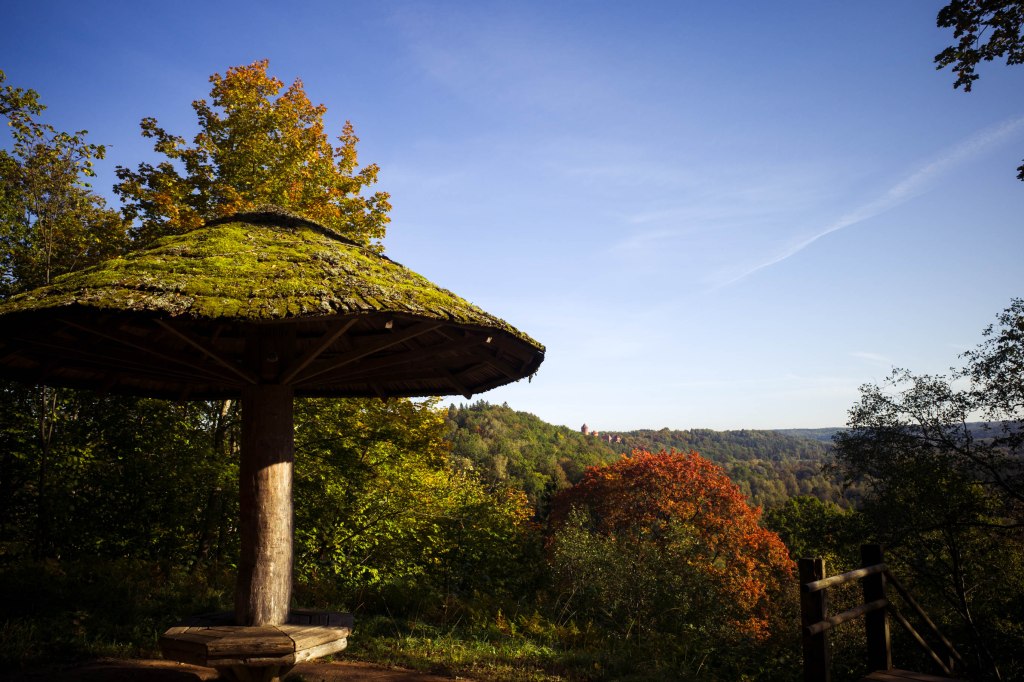
The Gauja Valley is heavily forested, and the first hints of autumn’s colour were just beginning to appear while I was there. The walk to Krimulda was a lovely jaunt along forested paths, with wooden stairs assisting me down one side of the valley and up the other. As I descended I could see out through the trees to the other side of the valley, and there awaited the manor house. Pale yellow with white columns. My destination.
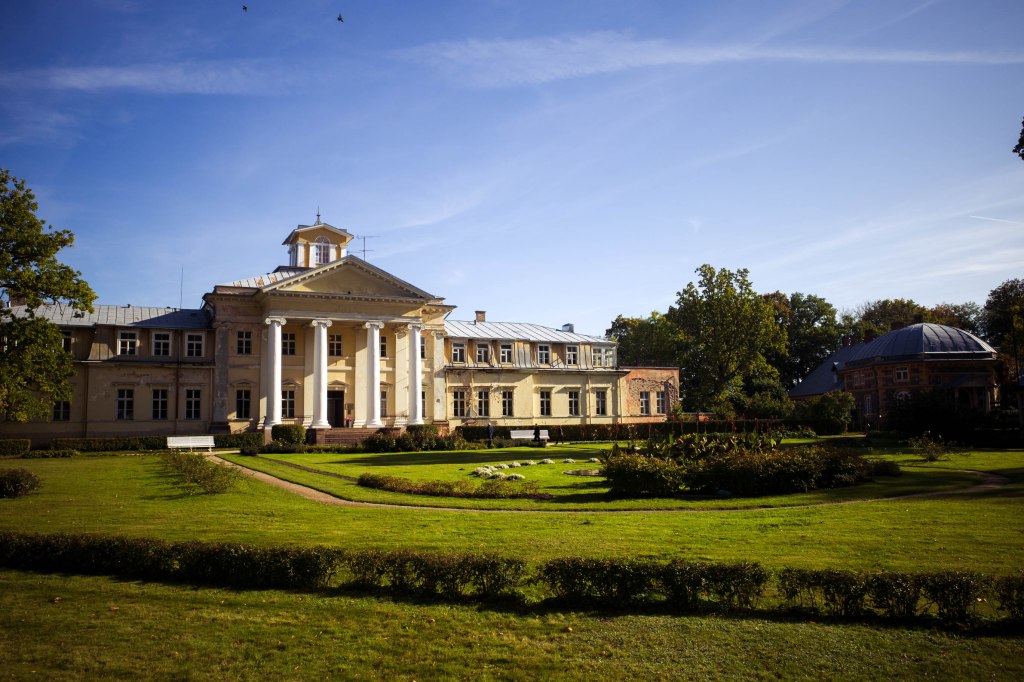
Once you’re in front of the manor you can see the peeling paint, but it is lovely nonetheless. The interior seems to have been redone in the 60s or 70s, and not in a style that has aged well, so the thrill of staying in a manor built in the 1800s quickly fades. Nevertheless, it was a pleasant place to stay. On two of my three nights I was the only person in my six bed dorm, and on the first night I may have been the only person in the building. I did hear some footsteps, but it was probably just a ghost.

It was lovely to spend some time in nature after being in cities for two weeks. I spent a day walking the valley to the various sights and enjoying some sweet solitude. I saw Gutmanis Cave, the largest cave in the Baltics, and it wasn’t super big. It is probably bigger than it used to be though, because for hundreds of years people have carved things into the soft sandstone, supposedly removing up to half a metre of stone. A stream runs out of the cave which is said to have healing properties, but I was not in need of healing, so I continued on.

The Gauja Valley also contains Turaida castle, and the land around it is the Turaida Reserve, which preserves some buildings from the 1800s maybe? I wasn’t paying attention to that, there was a castle to look at. Quite a nice brick castle, in fact. And you can go inside, and climb towers, and experience tight, dark, medieval stairways. It was nice.

I also spent some time in the town of Sigulda itself. It’s a nice small town. The Lutheran church there was rather pleasant, and it is the rare sort of church that lets you climb its tower without an exorbitant fee. There are also the ruins of a Livonian Order castle in the town. The Livonian Order were a branch of the Teutonic Knights, and they were crusaders sent to bring the love of God to the Baltic pagans whether they wanted it or not. The castle was nice though.

I should also mention that there are lots of cats here. I met one at Turaida Castle, I saw one and met one on the walk back from there, and I met two near to Krimulda. It’s wonderful.
Click here for more photos.

Image

Riga, Latvia

I arrived in Riga on the ferry from Stockholm, with approximately 5 hours to see the sights before I shipped off back to Sweden on day 2 of the Waves of Darkness on the Baltic Sea music festival (a post about that to come).

Five hours to see a city is far from ideal of course, but thankfully the main sights in Riga are all within a pleasant walking distance from the ferry terminal.

First things first. In Latvia, ‘sveiki’ means hello, and ‘paldies’ is thank you. Latvian and Lithuanian are two of the oldest languages in the Indo-European language family. This means that linguists believe them to be the closest to the common root language from which most of the languages in Europe, India, and Iran have evolved. Because of this I noticed many words which appeared similar to English or French, however there were just as many which, like ‘sveiki’, didn’t seem to have any relation to languages I know.

Anyhow, Riga is beautiful. It was overcast and slightly rainy while I was there, but I didn’t mind in the slightest. I started with a walk to a slightly out of the way ‘Soviet-style’ restaurant for lunch. The interior felt like a throwback to the 60s, but in a chic, hip way like we might have in North America, so I don’t feel like it was modelled after the sorts of places that working class Latvians would have eaten during Soviet times. I ate a pork cutlet with fries, it was very simple and plain, but it sure hit the spot. I also tried the famous Riga Black Balsam, which is a herbal liqueur that is black. It tastes just as potent as the description suggests.

Riga is renowned for having the largest collection of art nouveau architecture in the world. I couldn’t define art nouveau for you, but it’s from the turn of the century and it’s very nice. I took a lot of photographs of it so that I don’t have to describe it (they’re at the end).

There is also a top notch old town in Riga (there will be many an ‘old town’ throughout my journey, something about Europe and history I guess…). In Stockholm the old town was incredibly touristy, with the bottom floors of every beautiful old building full of souvenir shops and cafes. In Riga’s old town it seemed like only every second shop or so was in your face tourist-land. Of course this is because Riga is a smaller and less popular destination than Stockholm, but it really improves the experience. The art nouveau district is just normal residential streets, poor residents.

I visited my first ever Orthodox cathedral. Wow. It made Catholic cathedrals look plain in comparison. Photography was not allowed inside, so I will endeavour to paint a picture with words. Upon entering the air is redolent of incense. Every bit of wall is painted with designs and images. Gold and light blue dominate. All around the walls are icons, images of saints wrought in gold and silver, each with their own candle holder so worshippers can light candles at whichever icon they prefer. Opulent and dazzling probably describe it best.

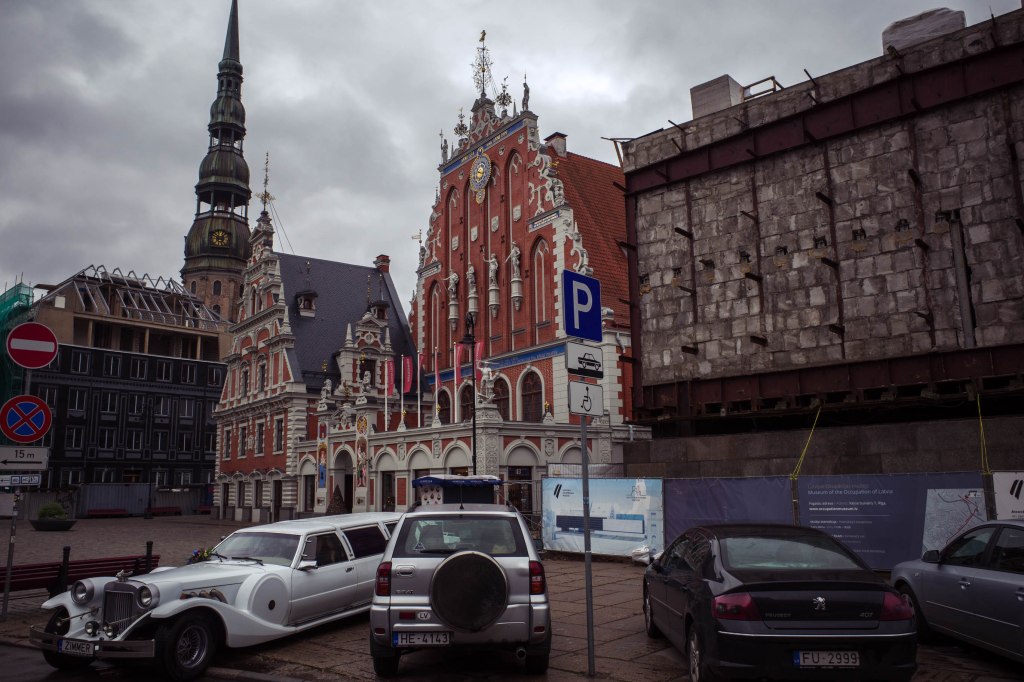
One of the biggest attractions in the old town is The House of the Black Heads. This was the home of the travelling merchant guild known as the Black Heads. Their symbol was St. Maurice, a North African, hence the name. It was destroyed in WWII and rebuilt in 1999, but you can still visit the original cellars.

Riga was excellent. I’ll be back in Latvia in a few weeks after I’ve been to Finland and Estonia, and I will gladly spend more time in Riga, although I also want to see more of Latvia.

Here are some photos.