Image

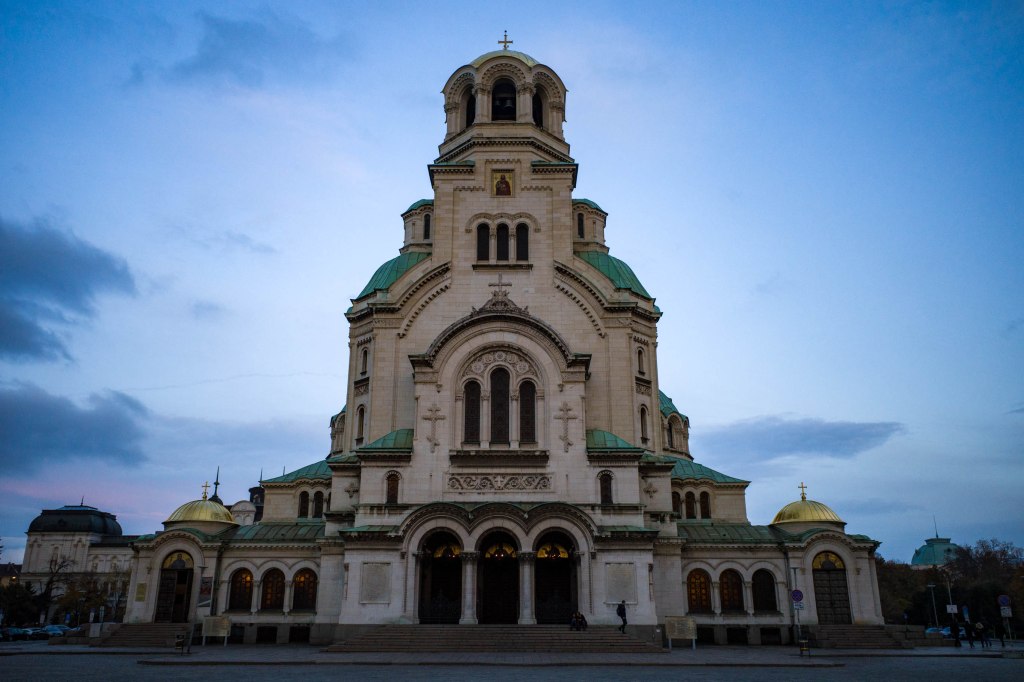
Sofia, Bulgaria

Sofia doesn’t make the best first impression. It’s a big, dirty city, and after the other beautiful places I’ve seen in Bulgaria it looked pretty grim in comparison. At first.

Just like Plovdiv, Sofia has a long history. You’ll find Roman ruins, medieval churches, and Communist apartment blocks all jostling for room here. The apartment blocks win.

Nonetheless there are some very beautiful parts to the city. The Orthodox churches are beautiful, and in the centre there is an Orthodox church, a Catholic church, a mosque, and a synagogue all within sight of each other.

Speaking of the synagogue, which has a beautiful interior, all of Bulgaria’s Jews survived the Holocaust. Although Bulgaria allied itself with the Axis, when Hitler asked in secret that they deport the Jews, it didn’t remain a secret. People took to the streets in protest, with Christians wearing Star of David armbands in solidarity. The government couldn’t really stand up to Nazi Germany’s power, so instead they delayed and deflected. They said that the Jews were busy doing labour and they would be sent once they were done. Eventually they delayed long enough and the war ended.

I visited a very interesting museum called ‘The Red Flat’. Museum doesn’t really describe what it is, which is a fully preserved communist era apartment. You enter with an audio guide and can walk around or relax while you hear stories about everyday life and the people who owned the apartment during communist times. You’re free to touch everything in the apartment, so you can flip through books, put on records, and fiddle with various vintage varietals. It was a pretty cool experience.

Sofia was a perfectly lovely city in the end, and it speaks to the quality of Bulgaria that it is my least favourite place in the country.

Bulgaria has really been my favourite country so far, and I’m sad to leave. But I’ve been here longer than any other country so far, and any of the upcoming countries could overtake the top spot, so I will continue on.
Enjoy a few photos.

Image

Plovdiv, Bulgaria

I am loving Bulgaria. I think I already mentioned that. Even though I encountered my first (minor) setback of my trip so far.

My trip has been going super smoothly, everything working as planned, always getting where I want to go. So it was about time something went wrong. It was really such a small problem that it hardly bears mentioning.

There I was in Veliko Tarnovo, all ready to catch a bus to my next destination of Plovdiv. I arrived 45 minutes early to the bus station (the bus stations in Bulgaria are in annoyingly non-central locations), and went to buy my ticket.

“It’s finished”, the ticket salesman tells me. For some reason ‘finished’ seems to be the English word used throughout Eastern Europe for ‘sold out’, or ‘closed’. So all the tickets to Plovdiv were sold out for the day. I guess Veliko was a popular weekend getaway for Bulgarians and they were all heading back home.

After sitting dejectedly for a few minutes, I booked a ticket for the next morning, and headed back to the hostel for another night. If I could have been stuck anywhere for an extra little while, beautiful Veliko Tarnovo was a good option.

The bus to Plovdiv takes four and a half hours. One full hour of that time is the bus sitting around at a rest stop in the mountains and a bus station in another city. It was also the first bus driver I’ve encountered who seems to follow the speed limit. Bus drivers throughout my trip so far have been all about efficiency, speeding down the road, passing at every opportunity. This bus driver was positively slow. We were on some winding mountain roads, to be fair, but even so I expected a bit more verve from the driver. The drive was beautiful at least.

One unnecessarily slow bus ride out of the way and I was in Plovdiv, the European Capital of Culture this year. It’s also the oldest city in Europe, so they’ve had plenty of time to perfect their culture.

Plovdiv feels like a city of culture, and like an old city. In the old town every one of the beautiful houses contains a museum or gallery. The upper levels of the buildings jut out over the street, a tricky construction technique to get more floor space without paying for a larger plot of land. The cobblestone streets in this area are the most rugged I’ve seen yet. But the old town is hardly the oldest thing in town.

Plovdiv has been a city occupied by many cultures over the years. Thracians, Macedonians, Romans, Bulgars, and the Ottomans all put their stamp on Plovdiv before the modern Bulgarian state was formed one hundred years ago. There is a gate in the city wall that may date to the Macedonians. There are also some excellent Roman ruins here. I love medieval stuff and Communist stuff, but my journey has been lacking Roman stuff up to this point.

Plovdiv has an amphitheatre that still hosts concerts (sadly none while I was there), and seated six thousand back in it’s prime, a stadium which seated thirty thousand but is mostly buried today, and other Roman ruins. Apparently, being named Capital of Culture gave the city more incentive to excavate and display some of these ruins, with some being made open to the public only months ago.

Seeking to become the Capital of Culture also caused the city to clean up an area in the city centre that was basically streets full of parked cars seven years ago. Today the area is full of cool cafes, restaurants, and bars, as well as beautiful street art.

There is also one of the longest pedestrian streets in the world, and it wouldn’t feel out of place in Western Europe.

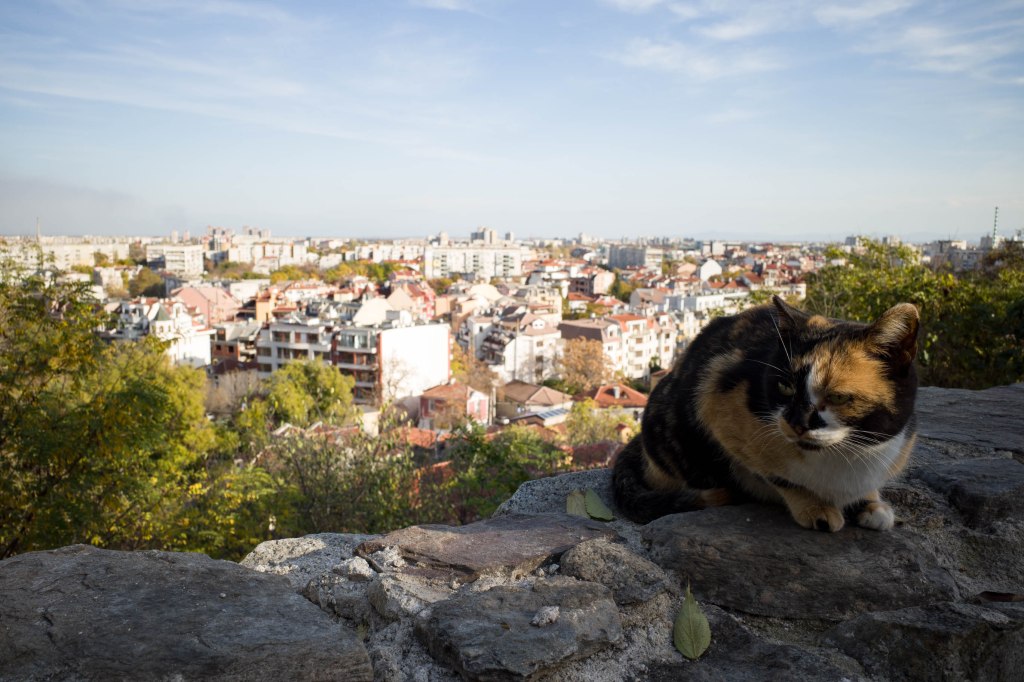
Also there are tonnes of cats here, and though they are stray, they’re getting fed and they’re healthy and friendly.

Bulgaria is my favourite country so far. I’m going to spend a little while longer here before heading into the rest of the Balkans and the former Yugoslavia.

Here’s some photos for your edification.

Image

Veliko Tarnovo, Bulgaria

I’m super happy to be in Bulgaria. It’s such a nice change from everywhere else I’ve been for the last two months. I’ve enjoyed every country so far, but the differences between countries has been subtle. If I were to go straight from Estonia to Romania I would of course notice big differences, but since I’ve made my way south more slowly, each country has been only a slight change from the one before it. This makes Bulgaria refreshing, as for the first time I feel that I’m somewhere different from where I’ve been before.

I guess it feels like I’m finally in the south of Europe. The weather’s been warm since I got to Poland, but it’s even warmer here. The landscape is starting to feel Mediterranean, the architecture as well. It’s nice.

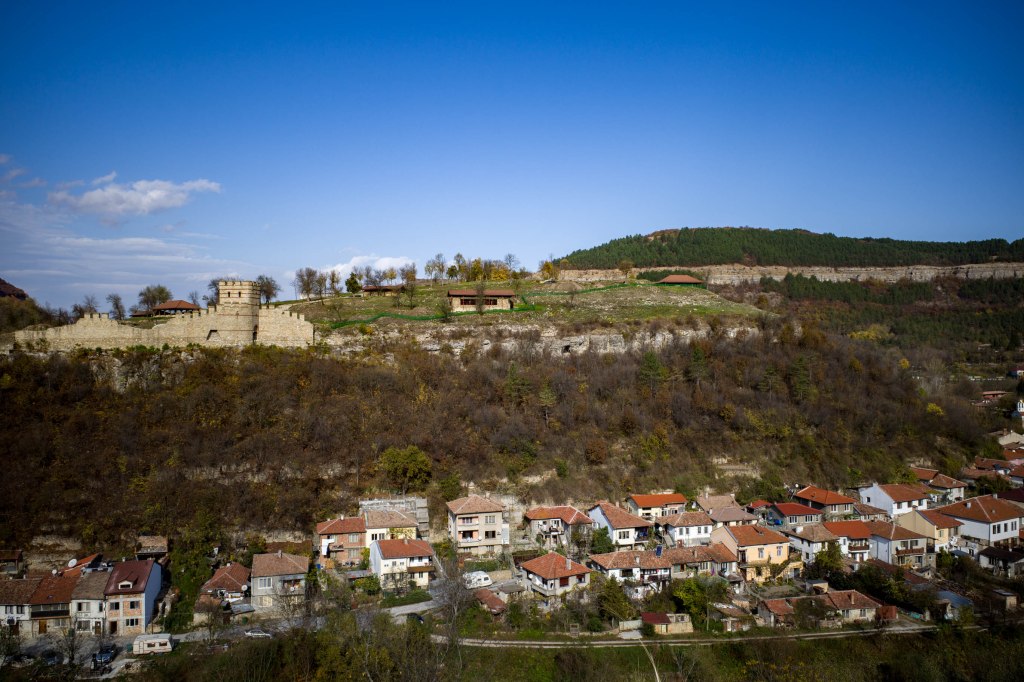
Admittedly I am in a beautiful old town in Bulgaria. I’ve yet to visit a big city, so opinions may evolve. I had to change buses in the city of Ruse right after crossing the border from Romania, and it was an uninspiring place. A couple of hours later, however, I was in Veliko Tarnovo, gazing up at the massive ruins of the Tsarevets Fortress, illuminated with the warm light of spotlights.

Veliko Tarnovo was the capital of Bulgaria during the middle ages, and it has a suitably large fortress to go with the title. Even in ruins Tsarevets is an imposing sight, covering a hilltop near the old town, with a causeway leading up to it. It’s a beautiful sight. The church in the very centre of Tsarevets has been well preserved and has very unique, modern murals inside.

I spent most of a day here just sitting in the sun reading. I’ve been travelling all this time, but now I feel like I’m on vacation.

I don’t really know what else to say. It’s lovely here, but words are failing me at the moment.

Today marks 2 months, or 60 days of travel. Time hast flew-eth.

My next stop is the oldest city in Europe.

Here are some photos.